What a Corgi Cart Fitting Involves
Watching your beloved Corgi, once a bustling, low-rider tornado of joy, start to struggle with their hind legs can be heartbreaking. The loss of mobility, whether it's a gradual decline from something like Degenerative Myelopathy or a sudden disc injury, leaves many Corgi parents feeling utterly helpless, wondering what steps they can take to restore some of that lost independence. This guide is here to walk you through the process of getting a mobility cart for your Corgi, demystifying each step from recognizing the need to the joyous moment your pup takes their first confident steps on wheels.
Recognizing the Need for a Mobility Cart for Your Corgi
It’s a tough realization, isn't it? One day your Corgi is zipping around, bossing imaginary cattle, and the next, you're noticing subtle changes. That once effortless wagging gait might become a little wobbly, or they might hesitate before tackling a small step. Understanding these early signals and the emotional impact they have on both you and your furry family member is the first, crucial step toward providing the support they need.
Signs Your Corgi is Losing Mobility
The signs can be incredibly subtle at first, almost imperceptible. Maybe you notice a slight drag in one back paw, or perhaps the nails on their hind feet seem to wear down faster than the front ones. A Corgi That Scuffs Its Back Nails is a classic, early indicator that they're losing proprioception – the sense of where their body parts are in space. They might start to wobble or sway when standing, especially after lying down for a while. You might also observe them struggling to get up from a lying position, pushing off with their front legs while their back end lags behind.
As the condition progresses, you might see them struggling with balance, perhaps even bumping into furniture or walls. Their hind legs might cross over when they walk, leading to trips and falls. For conditions like Degenerative Myelopathy and the Corgi or severe Disc Disease in a Long-Backed Corgi, this loss of coordination and strength can worsen over time. They might refuse stairs they once bounded up, or hesitate to jump onto the sofa. Observing these changes carefully, and perhaps even keeping a journal of when and how they occur, can be incredibly helpful information for your vet.
The Emotional Toll on You and Your Corgi
Let's be honest, it's gut-wrenching to watch your energetic Corgi lose their spark. The frustration you feel as you try to help them up, or the sadness that washes over you when they can't join a family stroll, is completely valid. You might feel guilty, wondering if you missed something, or if there was more you could have done. It's a heavy burden, and you're not alone in feeling it.
But don't forget the impact on your Corgi, either. Imagine wanting to chase a squirrel but your legs just won't cooperate. Or wanting to play tug-of-war but collapsing when you try to brace yourself. Corgis are intelligent, active dogs, and losing their independence can lead to their own form of depression or anxiety. They might become withdrawn, less interested in toys, or even exhibit signs of pain or discomfort. Providing them with a means to regain some of that precious mobility isn't just about their physical health; it's about restoring their spirit and improving their quality of life. The thought of The Months Between a Corgi's First Stumble and a Cart can feel agonizing, highlighting the urgency in seeking solutions.
The Initial Consultation: More Than Just Measurements
Once you've noticed those tell-tale signs, the first step is always a thorough veterinary evaluation. This isn't just about confirming a diagnosis; it's about understanding the specific nature of your Corgi's mobility challenge and ensuring a cart is the right solution. This initial phase involves specialized expertise and a detailed discussion about your Corgi's needs and your lifestyle.
Finding the Right Professional for the Fitting
When it comes to mobility solutions, you're looking for more than just your general practice vet – though they're always your first point of contact. Ideally, you want to consult with a veterinary neurologist, a physical rehabilitation specialist, or a reputable company that specializes in animal mobility devices. These professionals have a deeper understanding of canine anatomy, gait mechanics, and the intricacies of conditions that lead to hind leg weakness. They can properly diagnose conditions like those that cause The First Signs of DM in a Corgi and advise on the best course of action.
Many areas now have veterinary rehabilitation centers where specialists work with dogs using hydrotherapy, acupuncture, and, yes, mobility carts. These places often have staff experienced in custom fittings. You can also research dedicated pet wheelchair companies online; many have experienced consultants who can guide you through the process, often working in conjunction with your veterinarian. This collaborative approach ensures your Corgi gets a solution that's tailored to their specific medical needs and anatomical structure.
What to Expect During the First Assessment
The initial assessment is comprehensive. Your vet or specialist will perform a thorough physical and neurological exam, evaluating your Corgi's reflexes, muscle tone, and sensation in their hind legs. They'll watch your Corgi walk, paying close attention to their gait, how they carry their weight, and any compensatory movements they might be making with their front legs. They might ask for videos of your Corgi moving at home, as dogs often behave differently in a clinical setting.
This is also where your input as an owner is invaluable. Be prepared to discuss your Corgi's history: when you first noticed changes, how rapidly they've progressed, what their daily routine looks like, and what kind of activities they still enjoy (or wish they could enjoy). They'll also consider underlying conditions; for example, if your Corgi has Incontinence in a Corgi With DM, the cart design might need to accommodate this. This information helps the professional determine if a cart is appropriate, and if so, what type. For more complex cases, additional diagnostics like X-rays or an MRI might be recommended to pinpoint the exact cause of the mobility loss, though these typically happen before you even get to the cart fitting stage. Many families find a good pet insurance plan, like those offered by Healthy Paws, invaluable for covering the extensive diagnostics and follow-up care involved in these situations.
Discussing Cart Types and Customization Options
This is where it gets exciting, seeing the possibilities unfold. Mobility carts aren't one-size-fits-all, and the initial consultation will help determine which type is best for your Corgi. The two main categories are rear-support carts and full-support (quad) carts. Rear-support carts, sometimes called two-wheel carts, are most common for Corgis with weakness or paralysis in their hind legs but still good strength in their front legs. They lift the hindquarters, allowing the Corgi to use their front legs to propel themselves.
Full-support carts, or four-wheel carts, are for Corgis who need support for all four limbs, perhaps due to weakness in their front legs, severe instability, or if they're particularly weak overall. Beyond the basic type, there are many customization options. Consider factors like the terrain your Corgi will navigate (indoors, outdoors, rough trails), the cart's material (lightweight aluminum is common), and specific features like adjustable stirrups (to keep hind legs from dragging), padded harnesses, or even specialty wheels for different surfaces. Some carts also offer detachable components, allowing for easier transport or cleaning.
The Actual Fitting Session: Ensuring Comfort and Functionality
Once the decision has been made and the type of cart agreed upon, the magic really happens during the fitting. This isn't just about handing over a piece of equipment; it's a meticulous process to ensure the cart becomes a comfortable, natural extension of your Corgi's body, maximizing their new-found freedom.
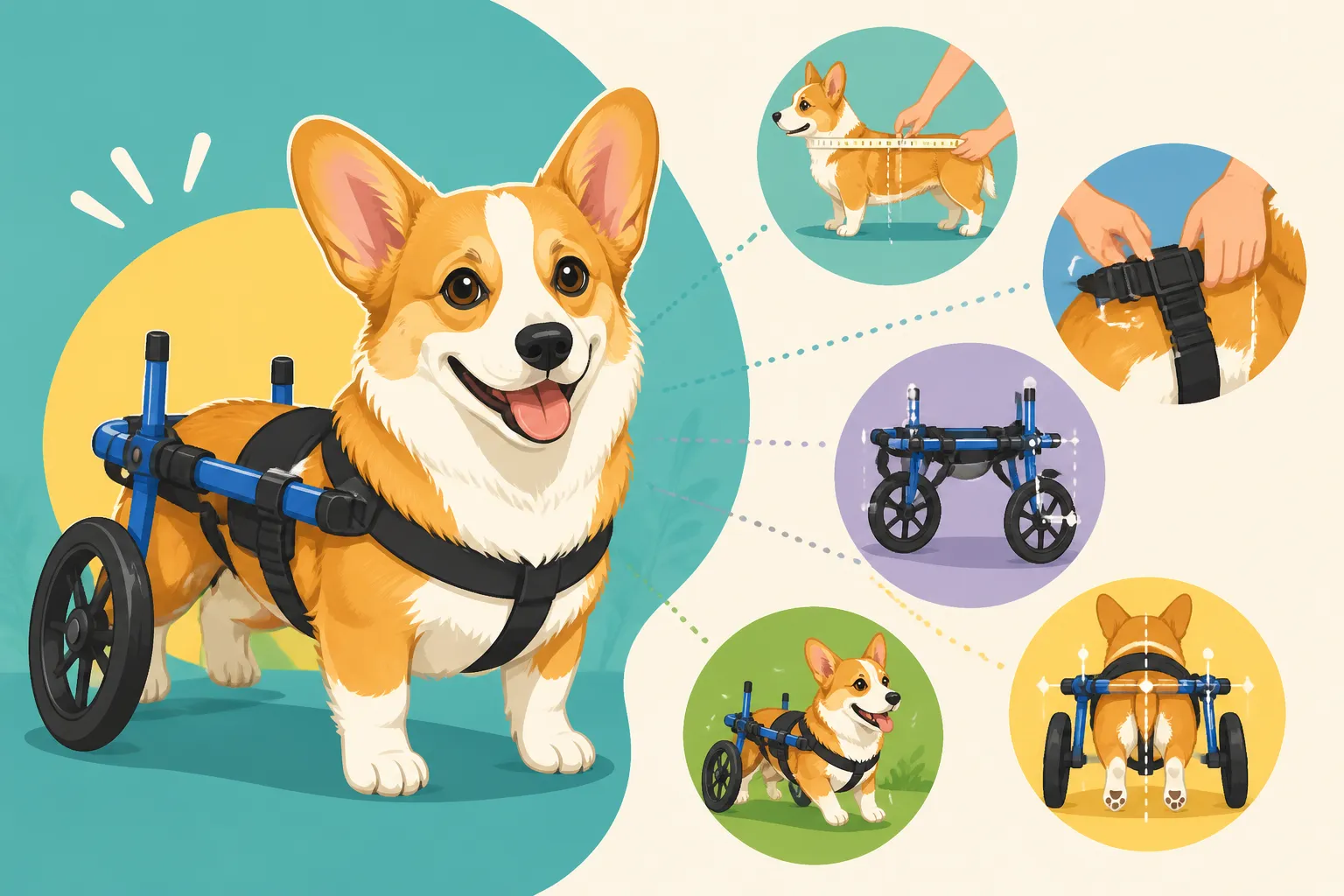
Taking Precise Measurements
Accuracy is absolutely paramount here. A good fitting involves taking a series of precise measurements to ensure the cart is perfectly proportioned for your Corgi. These usually include:
- Height to the top of the hip: This determines the cart's overall height, ensuring your Corgi is supported at a natural, level stance without being too high or too low.
- Body length: Measured from the armpit to the base of the tail, this dictates the length of the cart's frame, ensuring full support without hindering movement or being too long and cumbersome.
- Chest girth: Around the broadest part of the chest, this helps determine the size of the front harness, ensuring it's snug enough to provide support but not restrictive to breathing or movement.
- Width between hind legs: This measurement ensures the cart's frame is wide enough to accommodate your Corgi comfortably, preventing rubbing on their inner thighs.
- Weight: While not a measurement for the cart itself, your Corgi’s weight helps determine appropriate wheel size and frame strength. If your Corgi is a bit on the heavier side, perhaps having put on some pounds while less active, this is a good time to discuss weight management strategies. Proper nutrition is vital, and some owners opt for fresh, pre-portioned meals, like those from Ollie, to ensure their Corgi is getting precisely what they need without excess calories while maintaining a healthy weight for their back.
These measurements are often double-checked, and some specialists even use specialized templates or digital tools to ensure every dimension is exact. A poorly measured cart can cause pressure sores, restrict movement, or simply be uncomfortable, defeating its purpose.
Adjusting the Cart for Your Corgi's Unique Body
Even with precise measurements, every Corgi is unique, and fine-tuning is always part of the process. This involves careful adjustment of various components of the cart. The harness straps, which often go around the chest and belly, need to be tightened or loosened to distribute weight evenly and prevent chafing. The stirrups, which cradle the hind feet to prevent them from dragging, need to be adjusted so they’re long enough to keep the paws off the ground but not so long that they pull on the hips.
The height of the cart is crucial. Your Corgi should stand naturally, with their back relatively level, not angled up or down. The width of the frame also needs to be right – wide enough for comfort, narrow enough for maneuverability. The professional will meticulously check for any potential pressure points, ensuring no part of the cart rubs against sensitive areas, especially in the groin or armpit regions. They’ll observe your Corgi standing in the cart, making small tweaks until the fit is just right, feeling smooth and supportive.
First Steps and Observation
This is often the most emotional part for Corgi parents – seeing their dog take their first steps in the cart. Initially, your Corgi might be confused, hesitant, or even resistant. This is completely normal! It’s a strange new contraption, and they need time to understand what it is and how it works. The fitting specialist will gently encourage them, perhaps using treats or a favorite toy to entice them forward.
They’ll observe your Corgi's movement closely: Do the wheels turn freely? Is the Corgi balanced? Are they leaning? Are they trying to use their back legs, or are they completely suspended? These observations help with final adjustments. Many Corgis will take to it surprisingly quickly, especially those who have been longing for their independence back. Seeing that spark return, that determined look as they push forward, is truly unforgettable. It's a powerful moment, witnessing them reclaim a piece of their old life.
Life with a Corgi Cart: Adaptation and Ongoing Support
Getting the cart is just the beginning. The real journey lies in integrating it into your Corgi's daily life, helping them adapt, and ensuring it continues to serve their needs. It’s a commitment, but one that rewards you with boundless Corgi joy.
Training Your Corgi to Love Their New Wheels
Just like teaching a puppy to walk on a leash, getting your Corgi comfortable in their cart requires patience and positive reinforcement. Start with very short sessions, just a few minutes at a time, in a quiet, familiar environment like your living room. Praise them lavishly and offer high-value treats every time they move a little. Carts and Wheels for a Corgi With DM are tools for joy, and we want our pups to see them that way.
Never force them into the cart or scold them if they resist. Associate the cart with positive experiences: playtime, going outside, or getting a favorite treat. Gradually increase the duration of the sessions and introduce them to different environments. You might find that once they realize the cart means freedom and adventure, they'll become eager to get into it. Some Corgis even learn to back into their carts for you! Consider using a sturdy, comfortable harness that integrates well with the cart, perhaps one you can find easily from online retailers like Chewy.
Maintenance and Troubleshooting Common Issues
A mobility cart is an investment in your Corgi's quality of life, and like any piece of equipment, it needs a little TLC. Regularly inspect the cart for wear and tear, especially the wheels and any moving parts. Keep the frame clean, especially if your Corgi ventures into muddy or sandy areas. Check the harness and padding for any signs of rubbing, irritation, or matted fur, particularly in the armpit and groin areas. Adjustments might be needed as your Corgi's muscle mass changes, or as their condition progresses.
Common issues might include rubbing, which indicates a need for adjustment or additional padding. If your Corgi seems uncomfortable, hesitant, or develops sores, consult your vet or the cart provider immediately. Wheels can get stuck or make noise, requiring lubrication or cleaning. If you notice your Corgi dragging their feet or tripping more, the stirrups might need adjusting. Physiotherapy for a Corgi Losing Its Legs can also be a wonderful complement to cart use, helping to maintain muscle tone and flexibility in the parts of their body they still control.
The Transformative Impact of Mobility
It's hard to put into words the sheer joy of seeing a Corgi, who was once confined to a sedentary life, suddenly zooming around with purpose. A well-fitted mobility cart can be truly transformative. It allows them to participate in family walks again, chase a ball (maybe a little slower, but with just as much heart), explore the yard, and simply experience the world from an upright, independent perspective.
This regained independence isn't just for them; it's for you too. It alleviates some of the constant worry and the physical strain of lifting and supporting your Corgi. More importantly, it brings back that spark, that Corgi sass and happiness that we all cherish. Mobility Aids for a Corgi That Cannot Walk are not just practical devices; they are instruments of hope, restoring dignity and happiness to dogs and their families, extending the time you have to make cherished memories.
Here's a quick look at common cart types and considerations:
| Cart Type | Description | Ideal For | Key Considerations |
|---|---|---|---|
| Rear-Support | Two wheels support the hindquarters, front legs propel. | Hind leg weakness/paralysis, strong front legs. DM, IVDD. | Needs good front leg strength and core stability. |
| Full-Support | Four wheels provide support for all four limbs. | Weakness in all four limbs, severe instability, advanced DM. | Heavier, less maneuverable indoors, requires more space. |
| Custom-Built | Tailored precisely to unique dimensions and specific medical needs. | Dogs with unusual body shapes or complex conditions. | Higher cost, longer wait times. |
| All-Terrain | Features larger, sturdier wheels for outdoor adventures. | Active Corgis who love trails, beaches, or rough ground. | Can be bulkier, might not be ideal for indoor use. |
Disclaimer
This article is for general informational purposes only and does not constitute professional advice. Laws, prices and regulations vary by location and change over time. Consult a qualified professional for guidance on your specific situation.