Whether a Corgi Loses Weight on Food or Walks
Corgi weight loss relies on managing daily food intake rather than increasing exercise, because their efficient metabolism burns fewer calories.

Corgi weight loss relies on managing daily food intake rather than increasing exercise, because their efficient metabolism burns fewer calories.
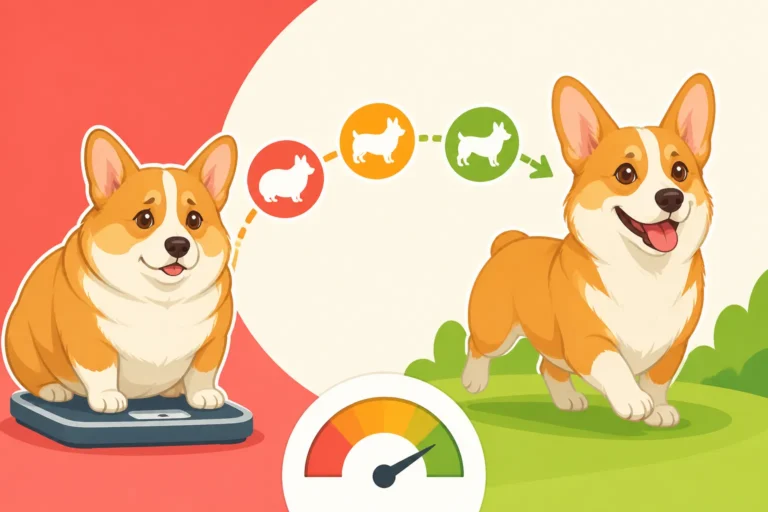
Corgi weight loss requires a slow pace to preserve muscle mass and protect their long spine and joints from extra strain.

Photographs help owners track Corgi body shape changes through thick double coats and catch subtle weight gain early with weekly snapshots.
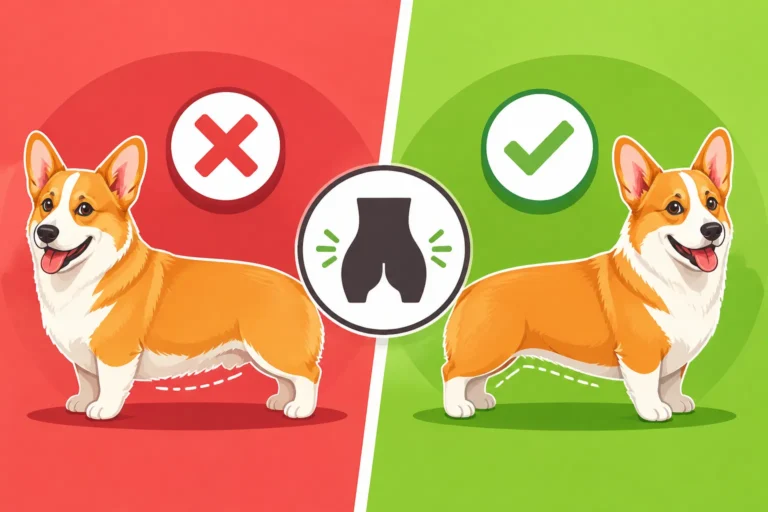
Corgi body condition and the abdominal tuck explain how to assess weight for long-term health, supporting joints and preventing disease.
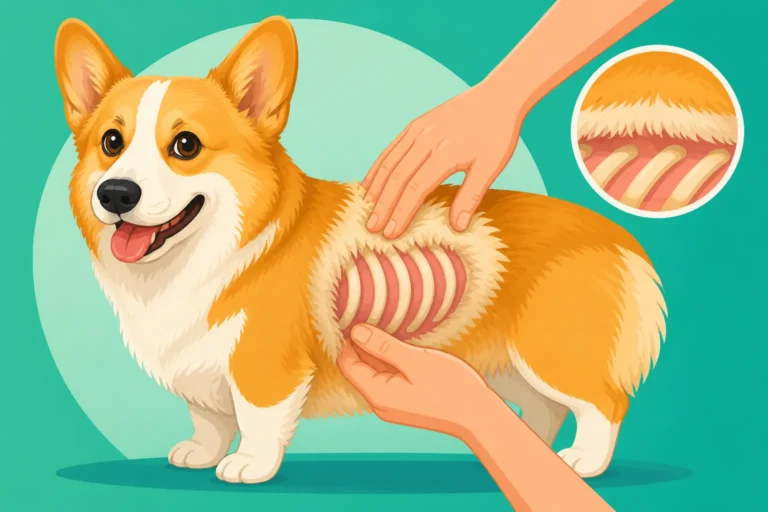
Corgi owners use a hands-on touch test to feel for ribs through dense double coats, accurately checking body condition and weight.

Cardigan and Pembroke Welsh Corgi weight differences stem from distinct histories, physical characteristics, and official breed standards.

Healthy adult male Pembroke Welsh Corgis weigh twenty-seven to thirty pounds, and females generally weigh twenty-five to twenty-eight pounds.

Free-choice feeding harms Corgis because genetic survival instincts drive them to eat everything, causing obesity and spinal disc pressure.

Feeding a Corgi two meals daily instead of one supports digestion, stabilizes blood sugar levels, and reduces rapid eating.

Adult Corgi caloric requirements and metabolism details help owners maintain ideal weight for Pembroke and Cardigan breeds.