A Corgi That Chases Cyclists
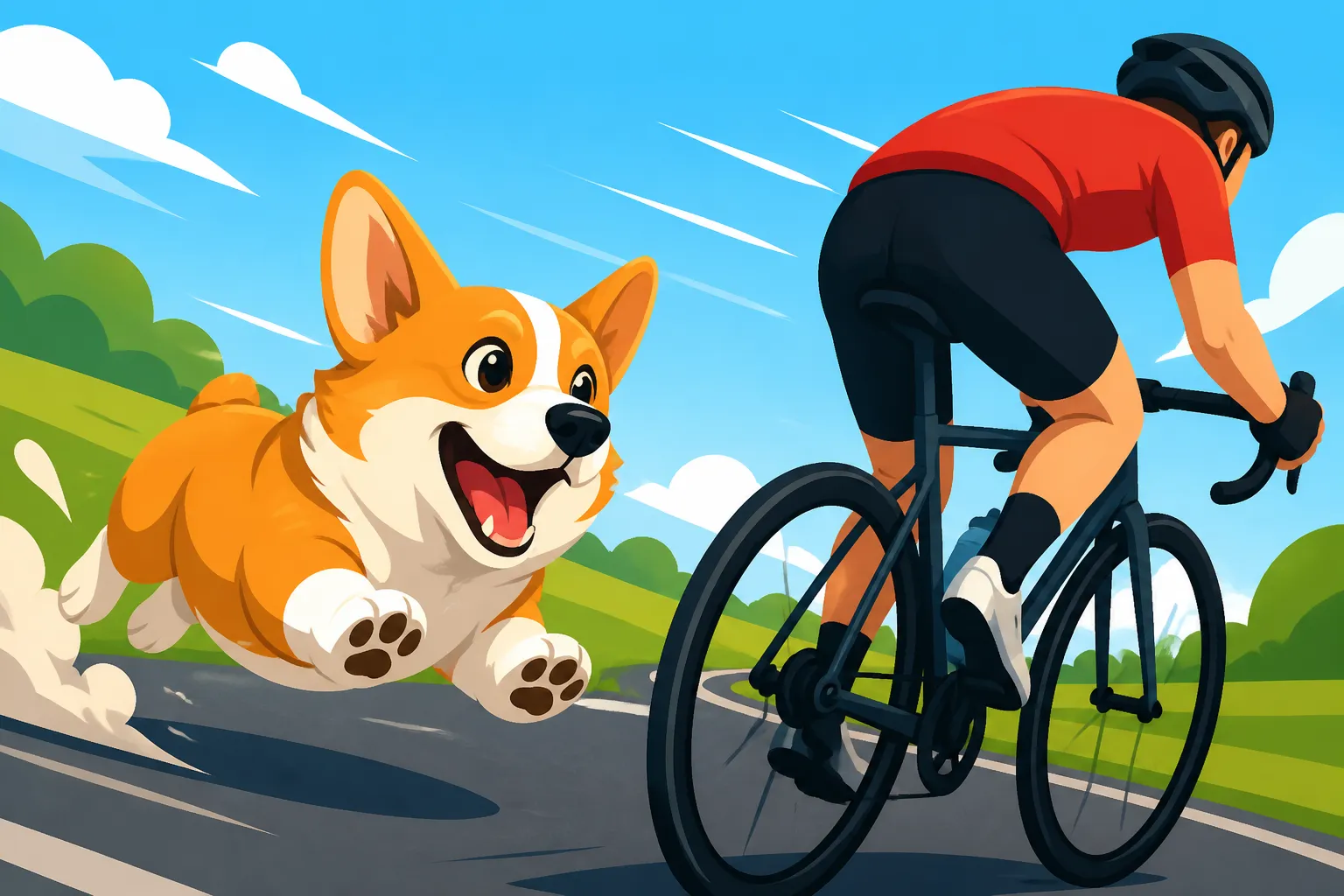
It’s a scenario many Corgi owners know all too well: you’re enjoying a pleasant walk with your furry friend, and then, seemingly out of nowhere, a cyclist appears. Before you can even react, your Corgi transforms into a little herding missile, barking and lunging, dragging you along for the ride. This guide is here to help you understand why your Corgi acts this way and, more importantly, what actionable steps you can take to manage and eventually mitigate this frustrating (and sometimes embarrassing) behavior.
Understanding the Root Cause: Why Corgis Chase Cyclists
When your adorable, low-rider Corgi suddenly turns into a barking, lunging terror on wheels, it can feel like a personal affront. But trust me, it’s not because they’re trying to be naughty. This behavior is deeply rooted in their history and instincts. It’s a puzzle with several pieces, and understanding each one is the first step to finding a solution.
The Herding Instinct in Action
Corgis, both Pembrokes and Cardigans, were bred for centuries to herd cattle. Think about that for a moment: their job was to drive large, stubborn animals by nipping at their heels and flanks, using their low stature to avoid kicks. They had to be quick, agile, and persistent. Now, consider a bicycle. It's a fast-moving object, often with spinning wheels and human legs pumping away – a perfect stand-in for a cow’s legs and hooves in a Corgi's mind. The movement triggers that ancient herding response. They aren't trying to be aggressive; they're trying to do their job, just in a modern context. It’s a natural, albeit inconvenient, display of their heritage. This instinct is so ingrained that even Corgis who have never seen a cow will often try to "herd" children, other pets, or even inanimate objects. You can learn more about this by reading The Cattle-Driving Nip a Corgi Still Has.
This instinct is often compounded by the element of surprise. Cyclists often appear suddenly, silently at first, then whizzing by. This sudden, fast-moving stimulus can kick that herding drive into overdrive before your Corgi even has a chance to process it rationally. They don't have time to think; they just react. This isn't unique to bikes; some Corgis will react similarly to skateboards, scooters, or even fast-moving joggers. It's all about that quick, linear motion that screams "herd me!" to their deep-seated programming.
Lack of Impulse Control and Overarousal
Beyond instinct, a significant factor is often a lack of impulse control. Our Corgis are intelligent dogs, but like toddlers, they need to be taught how to manage their urges. When a cyclist appears, your Corgi's arousal levels shoot up. They get excited, stimulated, and that primal urge to chase and herd becomes overwhelming. If they haven't been taught how to self-regulate or how to respond to your cues in high-distraction environments, that instinct takes over. It's like asking a child to sit quietly when a parade is going by – possible, but it takes training and practice.
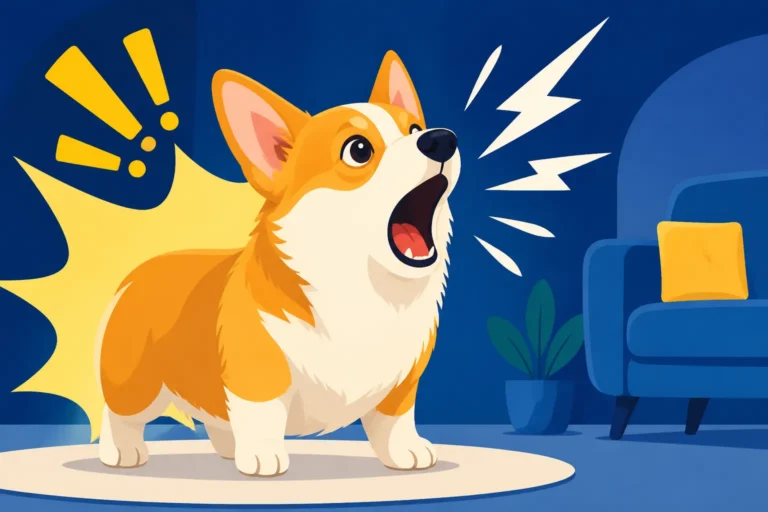
This overarousal can turn even a well-behaved Corgi into a lunging, barking dynamo. Their ears might flatten, their body might tense, and their focus narrows completely on the moving target. They literally can't hear you or process your commands because their brain is flooded with instinctual responses. This is why simply shouting "no!" often has little effect; your Corgi is too far gone into their reactive state. We need to teach them to think, even when their instincts are screaming at them to go. Training that focuses on "attention" and "disengagement" is critical here, helping your Corgi make better choices when confronted with high-value distractions.
Reinforcement, Accidental or Otherwise
Here’s the tough truth: sometimes, we accidentally reinforce the behavior. Every time your Corgi lunges and barks at a cyclist, and the cyclist rides away (as they invariably will), your Corgi experiences a form of reward. From their perspective, their barking and lunging worked – they successfully "drove off" the perceived threat or the "moving animal." This makes them more likely to repeat the behavior next time. They don't know the cyclist was leaving anyway; they just know their actions coincided with the cyclist's departure.
Furthermore, if you're pulling back on the leash or getting frustrated, your Corgi might pick up on your tension. They might interpret your stress as confirmation that the cyclist is indeed something to be concerned about. This can create a vicious cycle where your Corgi reacts, you get stressed, and your Corgi's reactivity increases because they sense your anxiety. Breaking this cycle requires calm, consistent intervention and a plan. Understanding A Corgi That Chases Bikes and Cars can give you more perspective on this specific issue.
Immediate Strategies for Managing On-Leash Chasing
Dealing with a Corgi that lunges at cyclists requires a multi-pronged approach. First, we need immediate management strategies to ensure safety and prevent the behavior from being reinforced. Then, we can move into long-term training.
Equipping for Safety and Control
Before you even think about training, make sure you have the right gear. A flat buckle collar simply won't cut it when your Corgi decides to put their whole 25-30 pounds of stubborn herding power into a lunge. It's not safe for them, and it's certainly not safe for your shoulder!
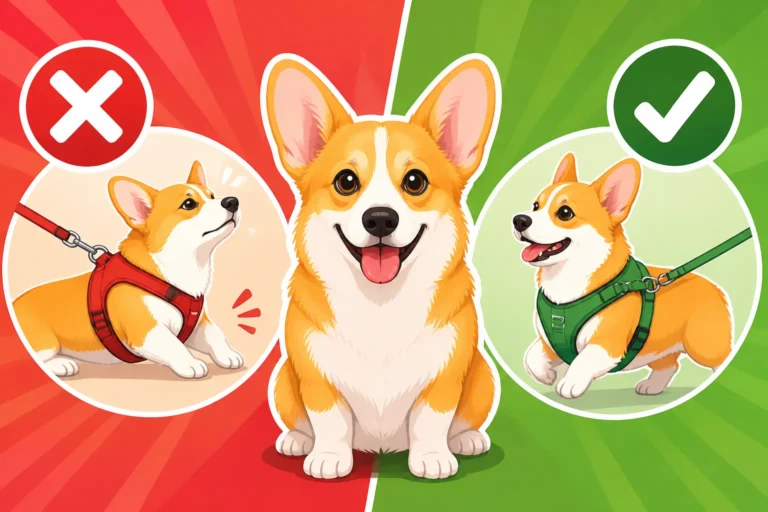
- A Well-Fitting Harness: A front-clip harness can be a game-changer. Instead of putting pressure on your Corgi's throat, which can cause coughing or even damage, a front-clip harness redirects their forward momentum. When they pull, they get turned to the side, making it much harder for them to gain traction for a full-on lunge. Brands like Easy Walk or Freedom Harness are often recommended, but it's important to find one that fits your Corgi's unique barrel chest and short legs comfortably, without chafing. You want something sturdy and reliable.
- A Sturdy Leash: Ditch the flimsy retractable leash, which offers no real control. Invest in a standard 6-foot nylon or leather leash with a comfortable loop. This gives you enough slack for your Corgi to sniff and explore safely, but also enough length to gather quickly for control when needed. Look for one with a strong, secure clip. On a platform like Amazon, you can find a huge variety of durable leashes and harnesses suitable for Corgis.
- High-Value Treats: Forget the dry kibble. When you’re dealing with something as exciting as a cyclist, you need treats that are truly irresistible. Think small pieces of cooked chicken, cheese, hot dogs, or store-bought soft training treats. These are your secret weapon for redirecting attention and rewarding calm behavior. The higher the value of the treat, the more likely your Corgi will choose you over the cyclist.
Using the right equipment is not about punishing your Corgi; it's about giving you the physical advantage and preventing dangerous situations. It sets both of you up for success during walks. For more on equipment choices, consider Whether a Corgi Should Wear a Harness Not a Collar.
Changing Your Walk Routine
Sometimes, the simplest solution is to avoid the trigger altogether, at least initially. This isn't a long-term fix, but it's crucial for breaking the cycle of reinforcement and preventing your Corgi from practicing the unwanted behavior.
- Adjust Your Route and Timing: If you know a particular street is a cyclist hotspot, avoid it during peak cycling hours. Explore quieter residential streets, local parks that restrict bikes, or even just take your walks at different times of the day when fewer cyclists are out. The goal is to set your Corgi up for success by reducing their exposure to triggers they can't handle yet.
- Increase Distance from Cyclists: When you do encounter a cyclist, even if it's from a distance, create as much space as possible. Cross the street, step behind a parked car, or duck into a driveway. The further away you are, the less intense the trigger is for your Corgi, and the easier it will be for them to remain calm. This is called managing the environment, and it’s a critical first step.
- Be a "Predictive Parent": Your Corgi can’t see around corners or over hedges like you can. Make it your mission to scan the environment constantly for potential triggers. The moment you spot a cyclist in the distance, before your Corgi even notices, you can begin to implement your management strategies. This proactive approach is much more effective than reacting after your Corgi has already launched into a full-blown chase.
By carefully managing your walks, you give yourself the opportunity to teach your Corgi how to behave appropriately without the added pressure of immediate, intense reactions. It's about setting the stage for successful learning.
Emergency Interruption Techniques
Even with the best management, sometimes a cyclist will appear out of nowhere, or your Corgi might react despite your best efforts. Having a few emergency interruption techniques in your toolkit is vital.
- The "U-Turn" or "About-Face": The moment you see a cyclist approaching, before your Corgi has fully engaged, quickly turn around and walk briskly in the opposite direction. This breaks their focus, changes the scenery, and gives you a chance to reset. As soon as you turn, offer a high-value treat to reward their movement with you. This teaches them that moving away from the cyclist earns rewards.
- "Scatter and Sniff": If a cyclist is too close for a U-turn, quickly toss a handful of high-value treats onto the ground in front of your Corgi. The act of sniffing and searching for treats is a calming behavior that physically pulls their head down and shifts their focus from the moving object to the ground. This also uses their powerful sense of smell, engaging a different part of their brain. You can grab small, durable treat pouches from Amazon to keep these handy.
- Physical Block (Gentle but Firm): If your Corgi is intent on lunging, you can position your body between your Corgi and the cyclist. This creates a physical barrier and can help them understand that they aren't meant to interact with the moving object. Always do this gently, without pulling or yanking, and combine it with a redirection cue or scatter of treats. The goal is to interrupt, not to punish.
Remember, these are temporary fixes to get you through the moment. The real work comes in the long-term training, but these techniques can prevent those moments from escalating into full-blown meltdowns, which can be exhausting for both you and your Corgi.
Long-Term Training for a Calmer Corgi
While management strategies are essential for safety and breaking bad habits, true progress comes from consistent, patient training. We want to teach our Corgis new behaviors that are incompatible with chasing and lunging.
Building a Strong "Watch Me" or "Look" Cue
This is arguably the most important cue for a Corgi that reacts to distractions. The "Watch Me" or "Look" cue teaches your Corgi to make eye contact with you on command, effectively breaking their focus on the environment.
- Start in a Low-Distraction Environment: Begin practicing in your quiet living room. Hold a high-value treat near your nose. The moment your Corgi looks at your eyes, say "Yes!" or click, and immediately give them the treat. Repeat this many times, making it a fun, rewarding game.
- Gradually Increase Distraction: Once your Corgi is reliably making eye contact in a quiet setting, slowly introduce more distractions. Move to a different room, then your backyard, then a quiet street corner, and finally, locations where cyclists might be present (but far away at first). The key is to progress slowly, only increasing the distraction level when your Corgi is successful at the current stage.
- The Pay-Off: The goal is that when you say "Watch Me," your Corgi's eyes snap to yours, even if a cyclist is passing by. This gives you a critical moment to redirect their attention, reward them for checking in with you, and calmly walk past the trigger. It’s about teaching them that you are the most interesting thing in the environment, especially when exciting things are happening. Building a strong recall is also vital here; see Corgi Recall and the Herding Instinct.
The online training platform BAXTER & Bella often provides excellent modules on foundational cues like "Watch Me," breaking them down into simple, manageable steps, which can be incredibly helpful for owners.
Desensitization and Counter-Conditioning
This is where you systematically change your Corgi’s emotional response to cyclists from negative (excitement, reactivity) to positive (calm, anticipation of treats).
- Find Your Corgi’s Threshold: This is the distance at which your Corgi notices a cyclist but doesn’t react. For some Corgis, this might be a block away; for others, it might be across a large field. You want to be far enough away that they can see the cyclist but remain calm and responsive to you.
- Pair the Trigger with Good Things: When a cyclist appears at or below your Corgi’s threshold, immediately start feeding them a stream of high-value treats. The cyclist appears, treats appear. The cyclist passes, treats stop. The idea is to create a new association: "Cyclists mean delicious treats!"
- Gradual Exposure: Over many sessions (days, weeks, or even months), slowly decrease the distance to the cyclists, always staying below your Corgi’s threshold. If your Corgi starts to react, you've gone too close, too fast – increase the distance and try again. This process requires immense patience and consistency. It’s a slow, steady effort to rewire their brain.
- Simulated Scenarios: If real cyclists are hard to control for training, consider using a friend on a bike, or even videos of cyclists played on a tablet (at very low volume and distance initially) to practice. This allows you to control the variables more precisely. Just be sure to always reward calm behavior.
This method effectively uses classical conditioning. Just as Pavlov's dogs learned to associate a bell with food, your Corgi will learn to associate cyclists with positive reinforcement. This transforms a stressful situation into an opportunity for treats and praise.
Boosting Impulse Control Through Games
Impulse control isn’t just about ignoring distractions on a walk; it’s a foundational skill that can be built through fun games at home. These games teach your Corgi to think before acting, to wait, and to self-regulate their excitement.
- "It’s Your Choice": Hold a treat in a closed fist. When your Corgi paws, licks, or tries to get the treat, keep your hand closed. The moment they pull back, even for a split second, open your hand. If they try to grab the treat, close it again. Reward them when they choose to wait for you to offer the treat politely.
- "Leave It": Start with a low-value treat on the floor, covered by your hand. Say "Leave it!" and wait for your Corgi to look away or disengage from the treat. Reward them with a different, higher-value treat that you have in your other hand. Gradually increase the temptation (uncovered treats, then more exciting treats) and eventually generalize it to objects in the environment.
- "Stay" and "Wait": Practice these cues extensively in various locations and with increasing distractions. A solid "Stay" means your Corgi can remain in position even when exciting things are happening around them. This is directly transferable to maintaining calm when a cyclist approaches.
- Pattern Games: Look up "pattern games" in dog training resources. These involve predictable sequences of treats and interactions (e.g., treat, treat, treat, pause, treat) that build anticipation and teach your dog to pay attention to you for information about what's coming next, rather than scanning the environment. These games from trainers like Leslie McDevitt are great for creating a more focused and attentive Corgi.
By regularly incorporating these impulse control games into your Corgi’s routine, you're not just training for cyclists; you're building a more well-rounded, thoughtful, and calm companion overall. This can even help with Training a Corgi That Makes Its Own Decisions, helping them defer to you rather than their instincts.
When to Seek Professional Help
Even the most dedicated Corgi owners can hit a wall. Reactive behaviors are challenging, and sometimes, you need an extra set of eyes and professional expertise to guide you.
Recognizing When You're Stuck
It's perfectly normal to feel frustrated, overwhelmed, or even defeated when your Corgi's reactivity isn't improving. Here are some signs that it might be time to call in a professional:
- No Progress Despite Consistent Training: You've been diligently working on the strategies above for several weeks or months, but you're not seeing any noticeable improvement in your Corgi's behavior, or things are even getting worse.
- Your Corgi's Reactivity is Escalating: The lunging and barking are becoming more intense, happening more frequently, or extending to new triggers that weren't an issue before. Perhaps they are starting to generalize their reaction to other moving objects or people.
- You Feel Unsafe or Overwhelmed: Your Corgi's lunging is strong enough to pull you off balance, or you're starting to dread walks altogether. Feeling unsafe or constantly stressed during walks is a clear indicator that professional help is needed to regain control and enjoyment.
- Your Corgi is Showing Aggressive Tendencies: While herding is often mislabeled as aggression, if your Corgi is actually trying to bite, growling, or showing signs of true fear-aggression towards cyclists, it's crucial to get professional help immediately. This indicates a more serious underlying issue that needs expert assessment.
Remember, asking for help isn't a sign of failure; it's a sign of a responsible owner who wants the best for their dog.
What a Professional Trainer Can Offer
A certified professional dog trainer, especially one experienced in reactivity and herding breeds, can provide invaluable support.
- Personalized Assessment: A good trainer will observe your Corgi's behavior, assess their body language, and help you understand the specific triggers and motivations behind their reactivity. They'll pinpoint areas where your training might be falling short or where adjustments are needed. They will be able to understand Whether a Trainer Understands a Herding Corgi.
- Tailored Training Plan: They can design a customized training plan that fits your Corgi's individual needs, your lifestyle, and your goals. This often includes fine-tuning the desensitization and counter-conditioning process, teaching advanced impulse control exercises, and developing specific management strategies for your unique environment.
- Hands-On Guidance: A trainer can demonstrate techniques, observe your handling, and provide immediate feedback, helping you refine your timing and mechanics. They can also help you manage your own stress and reactions, which can inadvertently affect your Corgi's behavior.
- Access to Resources: Many trainers have access to specific equipment, training tools, or even refer you to veterinary behaviorists if underlying medical issues or severe anxiety are contributing factors. They can also recommend appropriate enrichment activities, like scent work or puzzle toys, which can provide mental stimulation without exacerbating reactivity. Consider asking about The Job a Corgi Needs Instead of Herding You during your consultation.
Working with a professional can shorten the learning curve significantly, make walks enjoyable again, and ultimately build a stronger, more trusting relationship between you and your Corgi. Don't hesitate to reach out if you feel you're no longer making progress on your own. It's an investment in your Corgi's well-being and your peace of mind.
| Equipment Type | Description | Pros | Cons |
|---|---|---|---|
| Flat Buckle Collar | Standard collar around the neck. | Good for ID tags, basic leash manners. | Offers little control for lunging, can cause neck strain/choking. |
| Front-Clip Harness | Attaches leash at the chest, redirects pulling. | Excellent control for pulling/lunging, distributes pressure. | Can sometimes tangle front legs, requires proper fit. |
| Head Halter | Fits over snout, redirects dog's head. | Very effective control, gentle redirection. | Some dogs dislike it initially, requires careful introduction. |
| Back-Clip Harness | Attaches leash at the back, behind the shoulders. | Comfortable for dog, good for casual walks. | Can encourage pulling, offers less control for strong lungers. |
| Long Line | Extended leash (15-30 ft) for supervised freedom. | Allows practice of recall and distance control. | Requires open, safe space; can get tangled; not for busy areas. |
Disclaimer
This article is for general informational purposes only and does not constitute professional advice. Laws, prices and regulations vary by location and change over time. Consult a qualified professional for guidance on your specific situation.