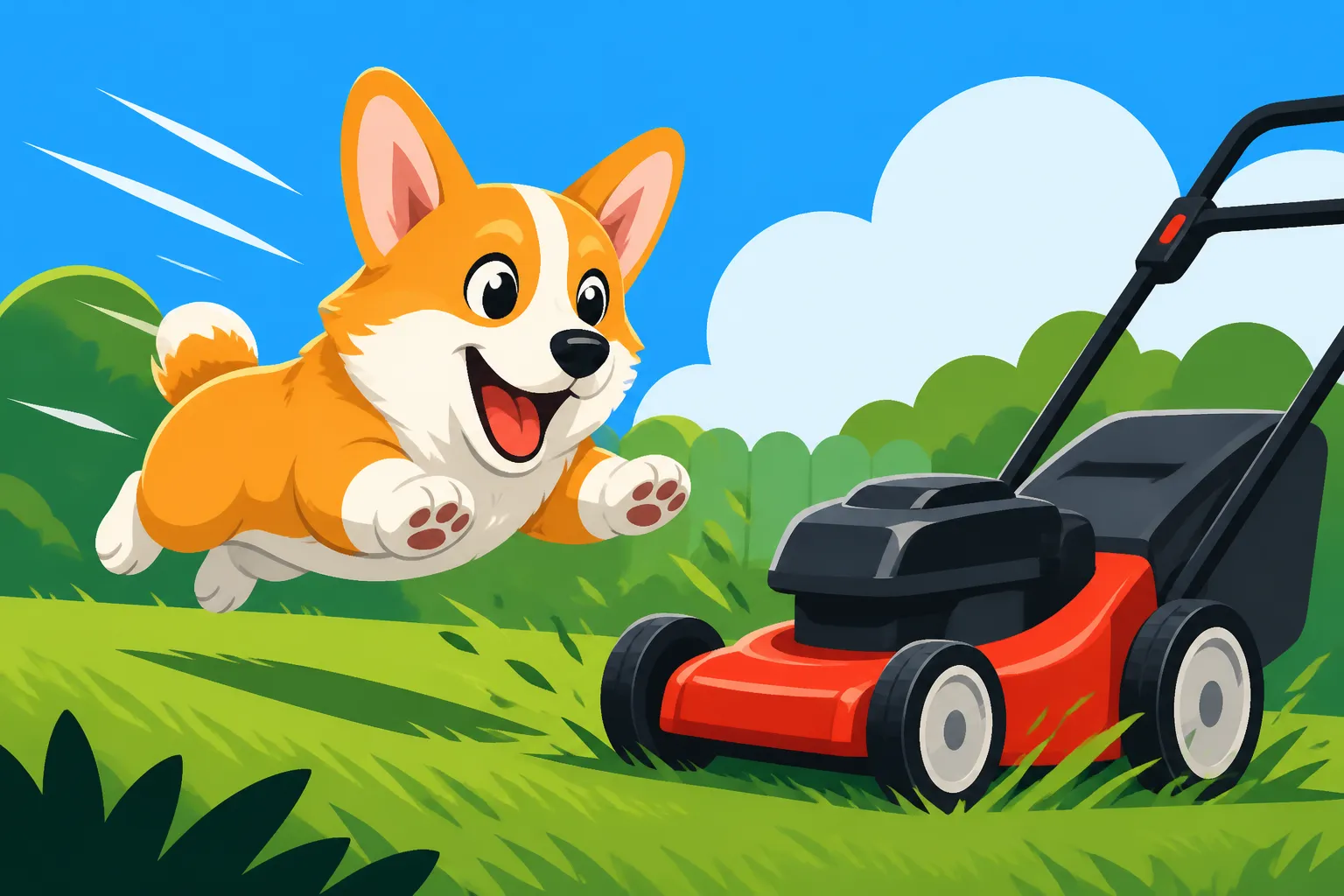
A Corgi That Chases the Lawnmower
It can be incredibly frustrating, and honestly, a bit terrifying, when your Corgi decides that the lawnmower is an enemy to be chased or a sheep to be herded. This common Corgi quirk isn't just annoying; it's genuinely dangerous, putting your beloved companion at risk of serious injury. This guide will delve into why your Corgi develops this fixation, the very real dangers involved, and how you can implement practical strategies to keep your furry friend safe and your lawn-mowing sessions stress-free.
Understanding the Instinct: Why Corgis Chase Lawnmowers
When your Corgi goes after the lawnmower, it's not because they're being "naughty" or deliberately disobedient. This behavior is deeply rooted in their history and genetics. Corgis, both Pembrokes and Cardigans, were originally bred as herding dogs, specifically for driving cattle. Their low stature allowed them to nip at the heels of stubborn livestock without getting kicked. That instinct to chase, to gather, and to control moving objects is still very much alive in their DNA.
The Herding Drive and Movement Trigger
Think about it from your Corgi's perspective. That noisy, fast-moving machine is doing exactly what a wayward cow or sheep might do: moving erratically, often in circles, and creating a distinct sound and vibration. To a Corgi, this isn't just a machine; it's a giant, unruly "flock member" that needs to be brought into line. Their primary instinct is to get behind it, to nip at its heels (or tires, in this case), and to try to direct its movement. It's a powerful, almost uncontrollable urge for many Corgis. They see the movement, they hear the sound, and their ancient programming kicks in, compelling them to act. This isn't a rational decision on their part; it's an ingrained behavioral response.
Prey Drive and High-Energy Breeds
Beyond pure herding, many dogs, including Corgis, possess a degree of prey drive. While they weren't bred to hunt rabbits, the fast movement and vibrating noise of a lawnmower can still trigger that primal chase instinct. For a breed that's often described as a big dog in a small package, Corgis have significant energy and a need for mental and physical stimulation. If they're not getting enough appropriate outlets for this energy, something as stimulating as a running lawnmower can become an irresistible target for their pent-up drive. It's an exciting, high-stakes game in their minds, even if it's terrifying for us. You might notice similar chasing behaviors with cars, bikes, or even children if not properly managed, all stemming from this inherent drive. A Corgi That Nips Running Children is another common manifestation of this strong herding tendency.
The Dangers of Lawnmower Chasing for a Corgi
While your Corgi might think it's all a fun game, the reality is that chasing a lawnmower is incredibly dangerous. The consequences can range from minor scrapes to life-threatening injuries, and even the emotional stress isn't good for them.
Physical Injury from the Mower
This is the most obvious and horrifying risk. A lawnmower, whether push, riding, or robotic, is a powerful piece of machinery with sharp blades. A Corgi, with its low-to-the-ground stature and compact body, is particularly vulnerable. They can easily get under or too close to the cutting deck, leading to severe lacerations, broken bones, or worse. We're talking about emergency veterinary visits, potentially amputations, or even fatal injuries. The speed at which an accident can happen is truly frightening; one second they're chasing, the next, a tragic incident has occurred. Even if the blades don't directly hit them, the mower itself can run over a paw or tail, causing crushing injuries. The sheer force and weight of even a small push mower can do significant damage to a Corgi's delicate frame.
Risk of Escape and Other Accidents
In their single-minded pursuit of the "prey," a Corgi might become so fixated on the lawnmower that they ignore boundaries. This means they could dart out of an open gate, dig under a fence, or even chew through a leash if they're tethered. Once loose and still fixated on the mower, they could run into the street, chase the mower into a neighbor's yard, or simply get lost. This scenario introduces a whole new set of dangers, from being hit by a car to encountering aggressive wildlife or other dogs. The intense arousal from chasing the mower can make them temporarily deaf to your calls and commands, overriding even excellent recall training. This makes them incredibly vulnerable in an uncontrolled environment. A Corgi That Chases Bikes and Cars is a similar, high-risk behavior driven by instinct.
Stress and Anxiety for Your Corgi
Beyond physical dangers, the act of chasing the lawnmower can be incredibly stressful for your Corgi. While it might appear as "fun" in the moment, the high arousal, the adrenaline rush, and the constant "failed" attempts to control the mower can be emotionally exhausting. This repeated cycle of intense excitement and frustration can lead to behavioral issues down the line, such as increased reactivity to other moving objects, general anxiety, or even aggression in other contexts. A dog constantly operating at such a high level of stress isn't a happy or healthy dog. It can also make them more prone to barking or being restless even when the mower isn't around, as they anticipate or remain hyper-vigilant. A Corgi Alarm-Barking With No Trigger could be a sign of underlying anxiety.
Practical Strategies to Stop Your Corgi Chasing the Lawnmower
Preventing your Corgi from chasing the lawnmower requires a combination of management, training, and redirection. Consistency is absolutely key here, and it's something you'll need to commit to every time the mower comes out.
Management: Preventing the Opportunity
The easiest and most effective way to prevent your Corgi from chasing the lawnmower is to remove them from the situation entirely. This isn't a training solution, but a crucial safety measure that stops dangerous behaviors before they can even start.
Indoor Confinement
The simplest solution is to bring your Corgi indoors and keep them there while the lawnmower is in use. This means closing doors and ensuring they can't slip out. If they get anxious or vocal when confined, consider setting them up in a quiet room with a stimulating chew toy or a puzzle feeder. This turns confinement into a positive experience rather than a punishment. A comfortable crate in a safe space can be incredibly useful here. Keeping a Crated Corgi Sane offers great ideas for managing confinement. For dogs that get agitated by the sound, playing some calming music or a white noise machine can help mask the mower's rumble.
Secure Outdoor Containment
If bringing them indoors isn't an option for a short period (perhaps you're just doing a quick trim), then ensure they are in a truly secure outdoor area, away from the mowing zone. This could be a sturdy kennel run with a solid roof, a securely fenced section of the yard that's completely separate, or even on a strong leash held by another responsible adult far from the action. Never tie your Corgi to an object and leave them unsupervised near a running mower, as they could pull free or injure themselves struggling against the restraint if their instincts kick in. A long, sturdy tie-out stake and a strong leash (available on Amazon) can be an option if closely supervised and placed well out of the mower's path, but complete physical separation is always best.
Training: Teaching Alternative Behaviors
Once you have management in place, you can start to work on training. This is about teaching your Corgi what to do instead of chasing, using positive reinforcement.
Desensitization and Counter-Conditioning
This is a gradual process. Start with the lawnmower off and stationary. Reward your Corgi for calm behavior near it. Then, move to having the mower on but far away, again rewarding calm. Slowly, over many sessions and days, decrease the distance, always staying at a point where your Corgi remains calm. If they react, you've moved too fast. You want to change their emotional response from "I must chase!" to "Oh, that's just a noisy thing, and I get treats for being calm." High-value treats are essential here.
"Go to Your Place" or "Settle" Command
Teach your Corgi a "go to your place" command, where "place" could be a mat, a bed, or their crate. Practice this command diligently in various situations, building up duration and distraction. Once they are proficient, you can use this when the mower is out. The goal is that when the mower starts, you can direct them to their safe spot, where they will stay calmly, knowing a reward is coming. You might even consider a comprehensive online training program, like BAXTER & Bella, which often covers foundational commands necessary for managing such strong instincts.
Redirection with High-Value Distractions
While you're working on the core training, have a plan for redirection. Before the mower even comes out, give your Corgi a highly engaging, high-value chew toy or a stuffed Kong. This needs to be something they absolutely adore and that will hold their attention for a long time. The idea is to occupy their mouth and mind with something positive and engaging before the mower becomes an irresistible temptation. This won't teach them not to chase, but it can be a lifesaver during the transition period of training. Consider rotating these special toys so they remain novel and exciting.
Here's a quick comparison of management vs. training strategies:
| Strategy Type | Goal | Immediate Action | Long-Term Solution | Requires Presence |
|---|---|---|---|---|
| Management | Safety, prevent bad habits | Remove Corgi from situation (indoors, secure kennel) | Creates safe environment for mowing | Yes, to ensure confinement |
| Training | Change behavior, teach alternatives | Desensitization, "Place" command, high-value redirection | Corgi ignores mower or goes to designated spot calmly | Yes, for active training |
Environmental Adjustments
Sometimes, slight changes to your routine or environment can make a big difference.
Mowing Schedule
Try to mow when your Corgi is already tired, perhaps after a long walk or a vigorous play session. A tired Corgi is less likely to have the energy or inclination to engage in intense chasing behavior. You could also try mowing when they are settled down for a nap, ensuring they are safely confined.
Use of Tools and Equipment
Consider a long leash or tie-out cable if you absolutely must have your Corgi outside and supervised while mowing. However, this is a last resort and requires constant vigilance. Ensure the leash is robust and securely anchored, and that your Corgi is far enough away that they cannot reach the mower. Heavy-duty ground stakes and chew-proof leashes, readily available on Amazon, can be options if this method is chosen, but remember, they are still a management tool, not a training solution. For those working with robotic lawnmowers, make sure your Corgi is not present when it's operating, as they can be just as enticing and dangerous.
When to Seek Professional Help
If you've tried all the above strategies and your Corgi's lawnmower chasing persists, or if their reactivity is so intense that you fear for their safety and your ability to manage them, it's time to call in a professional.
Identifying the Need for a Trainer
Don't feel ashamed if you need help. Strong, instinctual behaviors are hard to overcome on your own. If your Corgi shows any of the following, a trainer is a good idea:
- Extreme agitation or aggression towards the mower, even from a distance.
- Inability to calm down after the mower is put away.
- Resistance to all management strategies (e.g., trying to break out of confinement).
- Your training efforts aren't making any progress, or are making the situation worse.
- You feel overwhelmed or unsure how to proceed safely.
A professional dog trainer, especially one experienced with herding breeds and positive reinforcement, can assess your specific situation and tailor a plan. They can help you refine your desensitization techniques, teach more advanced redirection cues, or address any underlying anxiety your Corgi might have.
What a Professional Trainer Can Offer
A certified professional dog trainer or a veterinary behaviorist can provide invaluable guidance. They can:
- Observe and diagnose: They'll watch your Corgi's behavior around the mower and help you understand the root cause, whether it's pure herding instinct, prey drive, frustration, or a combination.
- Develop a customized training plan: They'll create a step-by-step plan that's appropriate for your Corgi's temperament and the severity of the behavior. This might include more advanced counter-conditioning, specific impulse control exercises, or even medication in extreme cases of anxiety (from a vet behaviorist).
- Teach advanced handling skills: A trainer can show you how to read your Corgi's body language more effectively and how to intervene before the behavior escalates. They can also help you practice using long lines and other tools safely.
- Provide support and accountability: Having a professional to guide you through the process can be incredibly reassuring and help you stay consistent, which is crucial for success. For those interested in online support, platforms like BAXTER & Bella offer virtual coaching sessions that can be incredibly helpful for personalized guidance, even if you can't find a local in-person trainer.
Remember, patience and consistency are your greatest tools. While it can be a challenging behavior to modify, ensuring your Corgi's safety around the lawnmower is absolutely worth the effort.
Disclaimer
This article is for general informational purposes only and does not constitute professional advice. Laws, prices and regulations vary by location and change over time. Consult a qualified professional for guidance on your specific situation.