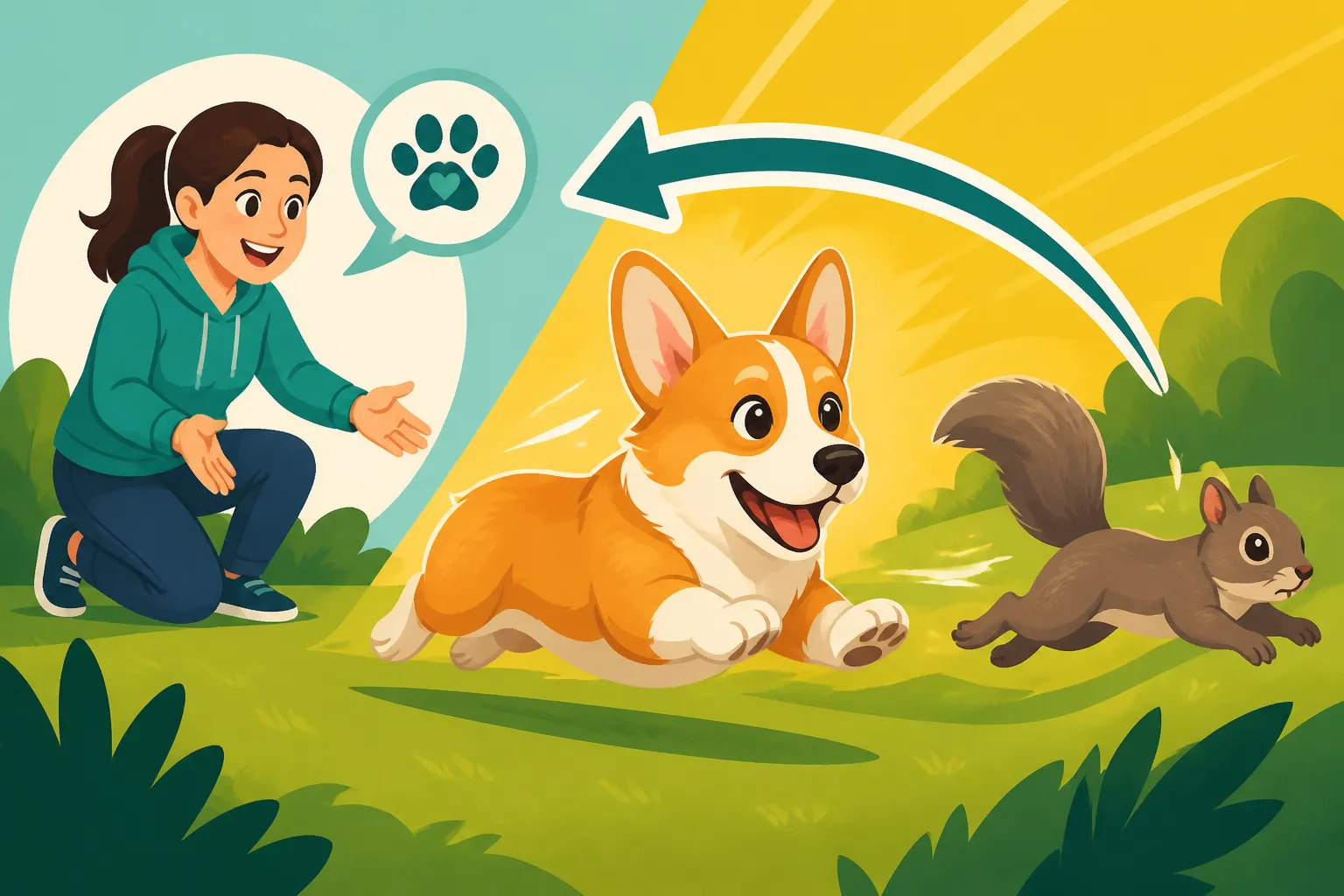
Getting a Corgi to Come Back Off a Chase
It's incredibly frustrating, isn't it, when your sweet, loyal Corgi spots a squirrel, a distant dog, or even a running child, and suddenly your voice becomes background noise as they bolt, ears seemingly switched off? That deep-seated herding and chase instinct can make reliable recall feel like an impossible dream, leaving you breathless and anxious. This comprehensive guide will walk you through understanding your Corgi's chase drive, building a rock-solid recall foundation, and practicing safely so your Corgi comes back to you, even when the world is full of tempting distractions.
Understanding Your Corgi's Instinct to Chase
Corgis are not just cute, low-riders with fluffy butts; they are intelligent, highly driven herding dogs, bred for centuries to move cattle much larger than themselves. This means they possess an innate desire to chase, gather, and direct movement. When you see your Corgi bolt after a flapping leaf or a bicycle, it's not simply disobedience; it's their genetic programming kicking in, often overriding any training you've done. It’s important to remember this isn't personal, but it is a challenge we Corgi owners have to navigate strategically.
The Herding Drive: More Than Just Chasing Squirrels
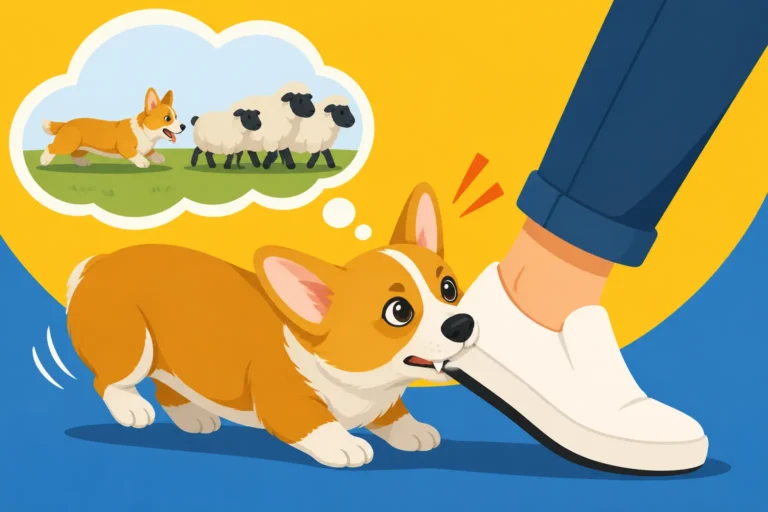
While we often associate "chase" with prey drive – a Corgi bolting after a rabbit – the herding drive is a bit different, though it manifests similarly. A Corgi's ancestors were tasked with nipping at the heels of stubborn cows to get them to move. This means movement itself is a powerful trigger. A child running, a jogger, another dog playing, or even a blowing plastic bag can activate that deep-seated instinct to "gather" or "control" the moving object. This isn't about aggression; it's about an intense focus on motion that makes everything else, including your desperate calls, fade into irrelevance.
Imagine you're in the park, and a group of kids starts playing tag. For many Corgis, that sudden burst of unpredictable motion is like a siren song. They might not intend to hurt anyone, but their instinct tells them, "Go! Gather! Direct!" They might nip at heels or try to cut off movement, which, while natural for them, can be alarming and potentially dangerous in a public setting. It’s this intense focus that makes recall so challenging when something truly exciting catches their eye.
The Independent Streak of a Corgi
Corgis are clever, but they also have a reputation for being quite independent thinkers. They were bred to work somewhat autonomously, making decisions in the field without constant human direction. While this independence makes them fascinating companions, it also means they're not always looking to you for permission or guidance, especially when their instincts are screaming at them. They'll weigh the immediate gratification of the chase against the delayed reward of coming back to you, and often, the chase wins.
This independent streak means that building a reliable recall isn't just about repetition; it's about building immense value for you and for the act of coming back. Your Corgi needs to believe that returning to you is the absolute best choice they can make, even better than the thrilling pursuit of whatever has caught their attention. This requires making yourself incredibly exciting and rewarding, far more so than a fleeting distraction. It’s a constant battle for their attention, and we need to be prepared to win it with enthusiasm and high-value rewards.
Building a Foundation: Recall Training Without Distractions
Before you can tackle the thrill of the chase, you need to establish a rock-solid "come" cue in a controlled, low-distraction environment. Think of this as laying the bricks for a strong wall before the wind and rain come. Without a solid foundation, your recall will crumble under pressure. Many owners jump straight to outdoor training, but this often leads to frustration and a "poisoned" recall cue, where your Corgi learns that "come" means "the fun is about to stop."
Making "Come" the Best Word in the World
Your "come" cue needs to be associated with overwhelmingly positive experiences. Start in a quiet room, maybe your living room, with no other pets or people to distract them. Have incredibly high-value treats on hand – we're talking boiled chicken, cheese, or hot dogs, not just kibble. You want your Corgi to think, "Oh my goodness, when mom/dad says that word, amazing things happen!" You might even use a special, exciting tone of voice, or crouch down to make yourself more inviting.
Practice this many, many times a day, but for very short sessions, maybe just 2-3 recalls at a time. Call your Corgi, and the instant they turn their head towards you or take a step, enthusiastically praise them ("YES! Good come!") and reward them generously when they reach you. Don't just give the treat and send them away. Hold them gently for a moment, offer a few more small treats, and lots of pets. Make it a celebration. You want them to feel like they've won the lottery every time they respond. The goal is to build such a positive association that the word itself becomes a predictor of joy.
The Power of the Long Line and Positive Reinforcement
Once your Corgi consistently comes to you indoors, it's time to move to a slightly more open but still secure area, like a fenced yard. This is where a long line becomes your absolute best friend. A long line (15-30 feet, available readily on platforms like Amazon) allows you to practice "off-leash" recall while maintaining control and preventing your Corgi from practicing ignoring you. This tool is invaluable for bridging the gap between indoor training and real-world distractions.
Attach the long line to a comfortable, non-restrictive harness – never a collar, especially with a Corgi's delicate neck and back. Let your Corgi wander a bit, sniff around, and then, when they're not intensely focused on something, call them. If they hesitate, gently reel them in with the line, continuing to use your enthusiastic "come!" and praise. The moment they arrive, shower them with treats and praise. The long line ensures they physically cannot ignore you, helping them understand that "come" always means coming all the way to you. Over time, they associate the cue with the positive outcome, not with the physical pulling. Whether a Corgi Should Wear a Harness Not a Collar is a good read on this.
Overcoming Distractions: Leveling Up Your Recall
This is where the real work begins. Your Corgi is brilliant at coming when nothing else is happening, but the moment a tempting visual or scent enters the picture, it's a whole new ballgame. We need to systematically introduce distractions, always setting our Corgi up for success and never asking for more than they can give.
Gradual Exposure to Real-World Triggers
Start with mild, predictable distractions and slowly increase the intensity. Maybe it’s a family member walking by in the house, then a child playing quietly in the yard, then a distant dog on the other side of a fence. The key is to start far enough away from the distraction that your Corgi can still hear and respond to you. If they fail, you've moved too quickly. The goal is success, not correction.
For example, if squirrels are a major trigger, practice recall in a park at a time when squirrels are less active, or in an area where they are visible but far off. As your Corgi gets more reliable, you can gradually reduce the distance. Use your long line here to prevent them from practicing the chase if they ignore you. The line allows you to gently guide them back, rewarding heavily for their return. This iterative process, moving closer only when they are consistently successful at the current distance, is fundamental to building reliable recall in a distracting environment. A Corgi That Chases Bikes and Cars discusses related issues with high-speed distractions.
High-Value Rewards and Engagement
When you're dealing with distractions, your rewards need to be even more exciting than the distraction itself. That means those boiled chicken bits or stinky cheese cubes become essential. But it's not just about food. Your Corgi loves to engage with you, even if they sometimes pretend they don't! Make yourself the source of fun. When they come back, don't just hand over a treat; engage in a quick game of tug, a joyful pat-down, or a mini-chase with you, where you're the one running away for them to "catch."
Consider incorporating interactive toys or puzzle feeders into your routine. BAXTER & Bella, for instance, often recommend using food puzzles or engagement toys to build a dog's focus on their handler and make training more like a game. This helps shift your Corgi's mindset from "what's out there?" to "what fun is mom/dad going to bring next?" Building a strong, playful relationship with your Corgi will make them want to come back to you, not just because of a treat, but because you are the center of their world's fun.
Specific Strategies for Corgi Chase Recall
Because Corgis have such a strong instinct to chase and herd, general recall advice often falls short. We need specific strategies that acknowledge their unique drives and physical structure. It's about working with their nature, not against it.
"Emergency Stop" and Name Recognition
Beyond your regular "come" cue, consider teaching an "emergency stop" or a "super recall" cue that you only use for critical situations and associate with the absolute highest rewards. This might be a sharp whistle, a specific word, or a unique hand signal. This cue should never be overused or associated with anything negative. It's for those moments when your Corgi is about to launch into a chase, and you need an instant, undeniable response. Practice this with huge, immediate payoffs when there are no distractions, then slowly introduce it to mild distractions.
Parallel to this, reinforce your Corgi's name. Your Corgi should instantly look at you when you say their name. This isn't recall, but it's the gateway to recall. If they aren't even acknowledging their name when something interesting is happening, they certainly won't respond to "come." Practice name recognition frequently, rewarding every single time they orient towards you. This helps create a baseline level of attentiveness that can be crucial in catching their attention before a chase fully begins. The Word That Stops a Corgi Mid-Chase provides more on this.
Creating a Safe Outdoor Environment
Even with the best training, perfect recall is an aspiration, not a guarantee, especially with a breed like a Corgi. For their safety, it's crucial to manage their environment. This means being realistic about off-leash privileges. A Corgi with a strong chase drive should generally not be off-leash in unfenced areas where they could encounter traffic, wildlife, or unsuspecting people. Their low stature and surprising speed make them hard to catch once they've committed to a pursuit.
When you are in an open space, always use that long line. It allows for exploration and freedom while ensuring you have a physical backup. Consider secure, fenced dog parks only if you know your Corgi is well-socialized and responsive, and even then, be vigilant for potential chase triggers. Ramps and steps, rather than jumps, are also important for Getting a Corgi to Come Back Off a Chase as they protect their delicate backs, regardless of where they are exercising.
Harnessing Their Instincts Positively
Instead of fighting their chase instinct, can you redirect it? Many Corgis excel at dog sports like flirt pole play, where they get to chase a lure, or even scent work, which engages their minds and noses without requiring them to physically chase animals or people. These activities allow them to fulfill their innate desires in a controlled, safe way.
Consider throwing a ball for them in a fenced area, or playing fetch with a squeaky toy. This gives them a positive outlet for that chase energy. Some Corgis even enjoy herding-style games with large, sturdy balls. By providing appropriate, safe outlets for their chase drive, you might find they are less compelled to go after inappropriate targets in the real world. Herding Trials and Instinct Tests for a Corgi can also provide a structured way to engage their natural talents.
Troubleshooting Common Recall Challenges
Even with consistent training, Corgis can throw us curveballs. It’s part of their charm, but it can be maddening when you’re trying to keep them safe. Understanding common pitfalls and having strategies to address them can save a lot of frustration.
My Corgi Ignores Me When a Specific Thing Appears
If your Corgi has one particular trigger they absolutely cannot resist – squirrels, bicycles, specific types of dogs – you need to back up your training. Go back to basics in a controlled environment, then introduce that specific trigger at a very low intensity and very far away. For example, if it's squirrels, go to a park where squirrels are present but across a wide-open field, so they are barely noticeable. Reward heavily for simply acknowledging you in their presence, even if they don't fully come.
The key here is called "proofing." You are proving to your Corgi that they can make good choices even with their ultimate temptation nearby. This is a slow, methodical process. Never put them in a situation where they are likely to fail, as this only reinforces the idea that ignoring you is an option. If you find your Corgi repeatedly ignoring you, it's often a sign that the distraction is too high, or your rewards aren't high enough. Sometimes, this means using a muzzle, not for aggression, but to prevent them from picking up tempting (and potentially dangerous) things off the ground during a walk while on a long line, allowing you to focus purely on recall.
The "I Saw It First" Corgi Mentality
Corgis, with their herding background, often have a very independent "I'll do it myself" attitude. They might see something, process it, and decide to act on it before you even have a chance to react. This is particularly true if they perceive themselves as the "manager" of their environment. For these Corgis, recall isn't just about coming back; it's about changing their mind mid-task.
To counter this, consistently practice "check-ins." Randomly reward your Corgi for simply looking at you while they're exploring or sniffing. Every time they glance your way, even for a split second, mark it with a "yes!" and a tiny treat. This builds a habit of checking in with you, making it more likely they'll hesitate and look your way before launching into a full chase. This proactive engagement makes your Corgi more likely to register your "come" cue when you deliver it, rather than being completely absorbed in their own agenda.
Training Tools and Resources for Recall Success
Having the right tools and knowing where to find guidance can make a significant difference in your recall journey. From physical equipment to online courses, there's a wealth of support available for Corgi owners.
Essential Gear for Recall Training
There are a few must-have items that will make your recall training much more effective and safer for your Corgi:
- Long Line: As discussed, a 15-30 foot long line is indispensable for practicing recall in open, unfenced areas. Look for durable, lightweight options on platforms like Amazon that won't tangle easily.
- High-Quality Harness: A comfortable, well-fitting harness (ideally one that clips in the front or on the back without putting pressure on the spine) is crucial. It protects your Corgi's neck and back, especially if you need to gently guide them with the long line. Corgi Hips and Front-End Structure and Why a Corgi's Back Is Built the Way It Is both highlight the importance of protecting their unique physique.
- Clicker: A clicker can be an incredibly precise training tool. The "click" marks the exact moment your Corgi performs the desired behavior (turning towards you, taking a step, reaching you), followed by a treat. This clarity helps them understand exactly what earned the reward.
- High-Value Treats: Always have a pouch full of your Corgi's absolute favorite, tiny, soft treats. The smellier, the better! These need to be special, reserved only for recall training and other high-level commands.
- Treat Pouch: A hands-free treat pouch allows you to quickly access rewards, making your timing faster and more effective.
Online Training Programs and Professional Help
Sometimes, you need more than just general advice. Online training programs can provide structured lessons and support. For example, some Corgi owners find programs like those offered by BAXTER & Bella helpful because they often include video tutorials and progressive steps for foundational training, including recall. These programs can guide you through the process, from basic impulse control to dealing with advanced distractions, all from the comfort of your home.
If you're really struggling, or if your Corgi's chase instinct is leading to dangerous situations, don't hesitate to seek professional help. A certified professional dog trainer or a veterinary behaviorist can assess your Corgi's specific drives and your training techniques, offering personalized guidance and solutions. They can help you implement strategies that are tailored to your Corgi's individual personality and your household environment, ensuring you're setting everyone up for success.
Table: Recall Training Tools Comparison
| Tool | Purpose | Pros | Cons | Best For |
|---|---|---|---|---|
| Long Line | Practicing "off-leash" recall in open areas | Safety; prevents practicing ignoring; builds reliable response | Can tangle; requires space; not for heavy pulling | Proofing recall in real-world, less-controlled environments |
| Clicker | Precise marking of desired behavior | Clear communication; speeds up learning; builds positive association | Requires good timing; two-handed operation initially | Building new behaviors; precision in timing rewards |
| High-Value Treats | Motivation and reward | Strong motivator; reinforces positive associations | Can lead to weight gain if not managed; Corgis can be picky | Initial recall training; high-distraction environments |
| Harness | Secure attachment for leash/long line | Protects neck/back; better control (especially front-clip) | Can be bulky; Corgis might pull if not properly fitted | Any on-leash activity; prevents strain on Corgi's back |
| Treat Pouch | Quick access to rewards | Improves timing; hands-free convenience | Can attract dog's attention to your waist | All training sessions; keeping rewards readily available |
Long-Term Management and Safety
Building reliable recall in a Corgi is an ongoing journey, not a destination. Their instincts are powerful, and while training can significantly improve their response, vigilance and smart management will always be key to their safety and your peace of mind.
Continuous Reinforcement and Practice
Even with a Corgi who seems to have a stellar recall, never stop practicing and reinforcing. Integrate short, fun recall bursts into every walk and playtime. Call them when they least expect it, reward them, and then immediately release them to continue what they were doing. This keeps the "come" cue fresh, positive, and unpredictable, making them more likely to respond even when something truly exciting crosses their path. Think of it as keeping their recall muscles strong and responsive.
Vary your training locations to generalize their recall. If they only come reliably in your backyard, they haven't truly learned recall; they've learned to come in your backyard. Introduce new parks, fields, and even urban environments (on a long line!) to challenge them with different sights, sounds, and smells. The more places they successfully practice recall, the more robust their response will be, regardless of the environment.
Prioritizing Safety Over Perfect Freedom
Ultimately, your Corgi's safety is paramount. If you have a Corgi with an extremely high chase drive, or one who has a history of bolting, it's okay to accept that truly off-leash freedom in open, unfenced areas might not be safe for them. This doesn't mean you've failed; it means you're a responsible owner making smart choices. Using a long line, securing your yard, and only visiting fully fenced dog parks are all excellent ways to provide them with exercise and mental stimulation while keeping them out of harm's way.
Remember, Corgis are prone to back issues, and sudden, uncontrolled sprinting and stopping can put undue stress on their long spines. Whether a Corgi Disc Injury Comes Back is a stark reminder of these risks. Prioritizing controlled exercise and preventing uncontrolled dashes protects their physical health as much as their immediate safety. Enjoy your Corgi's zest for life, but always with a plan that keeps their unique needs and instincts in mind.
Disclaimer
This article is for general informational purposes only and does not constitute professional advice. Laws, prices and regulations vary by location and change over time. Consult a qualified professional for guidance on your specific situation.