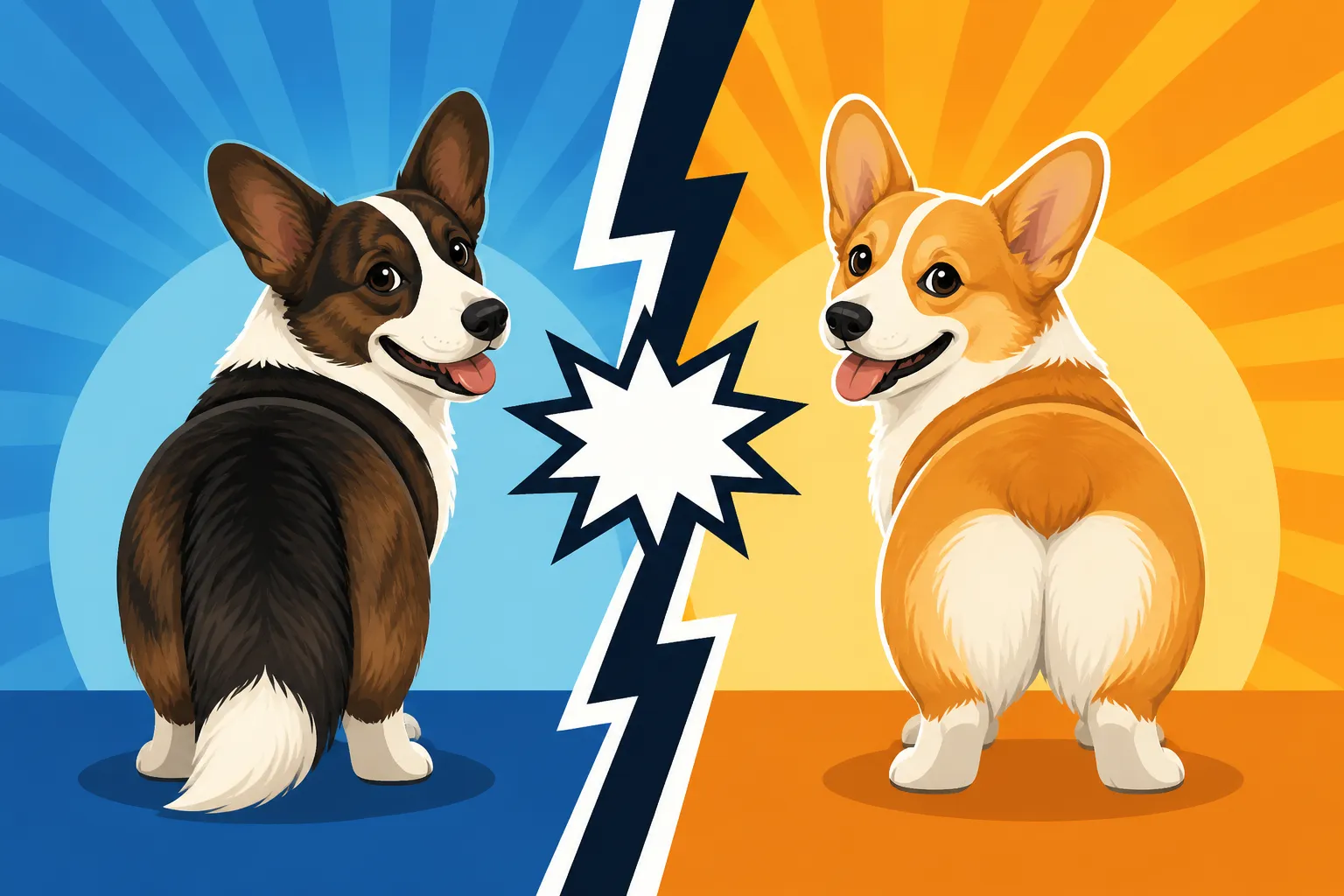
Cardigan Tails Against Pembroke Tails
It's incredibly common for new Corgi enthusiasts, and even seasoned owners, to wonder why some Corgis have those adorable little stubby tails while others sport a magnificent, flowing plume. This isn't just a matter of personal preference or a fashion statement; the differences in Corgi tails tell a deep story about their distinct breed histories, specific breed standards, and even their genetics. If you've ever felt a little bewildered trying to tell a Pembroke from a Cardigan just by looking at their hindquarters, or wondered if a long-tailed Pembroke is "wrong," you're in the right place. This guide will meticulously break down the fascinating world of Corgi tails, clarifying the differences between Cardigan Welsh Corgi tails and Pembroke Welsh Corgi tails, delving into their origins, and what these distinctions mean for owners today.
The Distinct Histories Shaping Corgi Tails
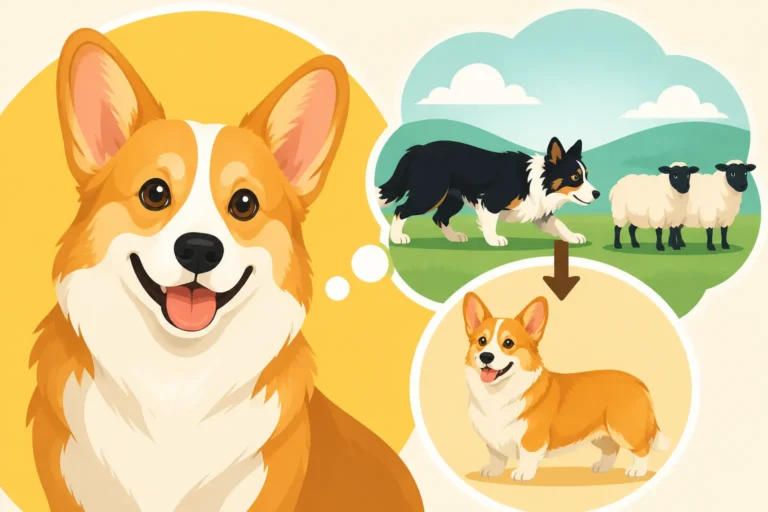
When we talk about Corgi tails, we're really talking about two distinct breeds: the Pembroke Welsh Corgi and the Cardigan Welsh Corgi. While both are short, long-bodied herding dogs from Wales, their histories diverged significantly, leading to differences in appearance, temperament, and, yes, their tails. Understanding these historical roots is crucial to appreciating why their tails look the way they do today.
The Ancient Lineage of the Cardigan
The Cardigan Welsh Corgi is often considered the older of the two breeds, with a lineage that can be traced back over a thousand years to the Teckel family of dogs, which also includes the Dachshund. These dogs were integral to the farming communities of Cardiganshire, Wales, primarily used for herding cattle, guarding the farm, and even hunting vermin. Their long, fox-like tails were a natural part of their silhouette, serving as a balance for quick turns and a visual aid for herders in dense brush. They were never traditionally docked. Their long, sweeping tails are as much a part of their ancient heritage as their distinct forelegs and deep chest. The Cardigan's Twelve Hundred BC Origins reveals just how deep their roots run.
Historically, a Cardigan's tail was not just for aesthetics; it was a functional tool. When a dog is low to the ground, a substantial tail helps with balance during sharp turns while working livestock. Imagine a Corgi navigating rough terrain, dodging a cow's hooves, or weaving through thick undergrowth – that tail acts as a counterbalance, much like a rudder on a boat. The breed standard for the Cardigan Welsh Corgi explicitly calls for a long, well-carried tail that is set on a line with the topline, expressing alertness or a wagging greeting.
The Pembroke's More Recent Arrival
The Pembroke Welsh Corgi, by contrast, is a more recently established breed, believed to have descended from Spitz-type dogs brought to Wales by Flemish weavers around the 10th century. These dogs were bred for similar purposes to the Cardigans – herding cattle by nipping at their heels and then ducking out of the way – but their genetic makeup and subsequent development took a different path. The Pembroke became synonymous with its short, often non-existent tail. For centuries, Pembrokes were routinely docked, a practice rooted in their working history and later, breed standards.
The tradition of docking came from a practical, albeit now controversial, place. A long tail on a herding dog working among cattle was seen as a liability, prone to being stepped on or caught, which could lead to painful injuries. Furthermore, working dogs were often exempt from dog taxes, and a docked tail became an easy visual identifier for a "working dog." Over generations, this became a defining characteristic of the Pembroke Welsh Corgi. Even if a Pembroke was born with a full-length tail, it was almost always docked within the first few days of life to conform to the breed's expected appearance.
The Pembroke Welsh Corgi Tail: Docked vs. Natural Bobtail
For many years, the iconic image of a Pembroke Welsh Corgi featured that adorable, wagging "nub" of a tail. This was primarily due to the widespread practice of tail docking. However, as laws and attitudes towards animal welfare have evolved, so too has the appearance of the Pembroke's tail.
The History and Controversy of Tail Docking
Tail docking involves the removal of part or all of a dog's tail, typically performed on puppies a few days after birth. For Pembrokes, this practice was historically justified as a measure to prevent injury while working livestock, as well as to meet breed standards that favored a short tail. The procedure was usually done by a veterinarian, or sometimes by breeders themselves, often without anesthesia, leading to significant ethical debates. Many countries have now banned or severely restricted tail docking for cosmetic purposes, leading to a rise in naturally tailed Pembrokes.
This shift has created a bit of a visual quandary for those used to the traditional "bobbed" look. A Pembroke with a full, flowing tail might look unfamiliar to some, even though it's a completely natural and healthy presentation for the breed. The key frustration for many owners today is navigating these changing norms, especially if they live in an area where docking is still permitted but increasingly frowned upon, or if they adopt a dog whose tail status is unclear. It’s also important to remember that the appearance of a dog's tail doesn't dictate its health or personality. Whether your Pembroke has a docked tail or a long one, their happy, wiggly personality shines through.
The Natural Bobtail Gene in Pembrokes
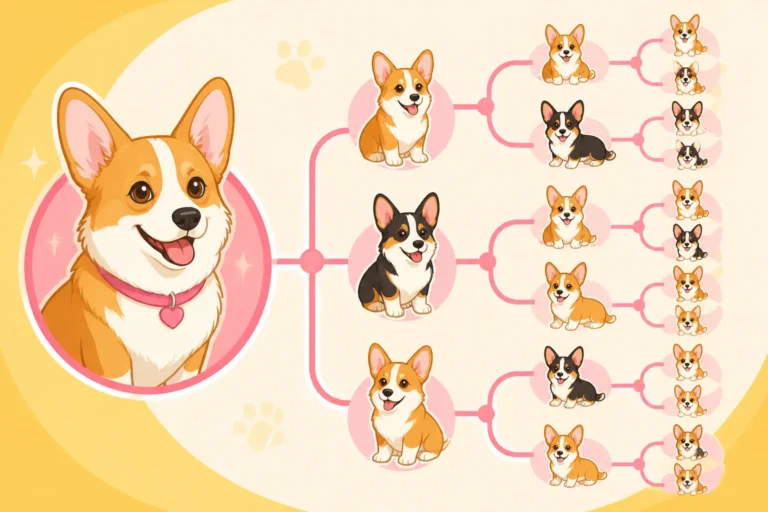
Interestingly, some Pembroke Welsh Corgis are born with a naturally short tail – a "natural bobtail" (NBT). This isn't the result of docking, but rather a specific genetic mutation. The gene responsible for this trait is called the T-box transcription factor T gene (C189G mutation in the brachyury gene). A dog carrying one copy of this gene (heterozygous) will typically have a naturally short tail, ranging from a short stub to about three-quarters of a full-length tail. A dog carrying two copies of this gene (homozygous) is usually not viable and often results in early embryonic death. This means that all natural bobtail Corgis carry only one copy of the gene. The Corgi Bobtail Gene Causes Problems delves into the complexities of this genetic trait.
So, while historically most short-tailed Pembrokes were docked, today you might encounter Pembrokes whose short tails are entirely natural. This can be confirmed through DNA testing, which can identify the presence of the NBT gene. Breeders who aim to produce naturally bobtailed Pembrokes often test their breeding stock to ensure they are mating an NBT dog with a full-tailed dog to avoid any genetic complications. This careful breeding helps ensure healthy puppies while also conforming to a short-tailed aesthetic without surgical intervention. If you're looking for an NBT Pembroke, ask your breeder for documentation of the genetic testing. Products like those found on Chewy for DNA testing can help breeders confirm these genetic markers.
The Cardigan Welsh Corgi Tail: A Story of Length and Expression
Unlike their Pembroke cousins, the Cardigan Welsh Corgi has always been characterized by its long, flowing tail. It's a hallmark of the breed, described in the breed standard as an extension of their personality and ancient working heritage.
The Fox Brush: A Defining Trait
The Cardigan's tail is often described as resembling a "fox brush" – long, bushy, and carried low when at rest, but capable of being carried high and gaily when alert or excited. It should never curl over the back to touch the body, as this is considered a fault in the breed standard. This tail is an essential part of the Cardigan's overall balance and silhouette, contributing to their distinctive appearance. For a Cardigan owner, that tail is a constant source of joy, providing an expressive outlet for their dog's emotions, from a happy wag that can clear a coffee table to a subtle twitch of curiosity.
Imagine a Cardigan navigating through tall grass or brambles; that long tail is far less likely to be stepped on by another animal or caught on obstacles when held low or used for balance. It's a natural counterweight for their unique body structure, enabling the agility required for herding. The elegance and functionality of the Cardigan's tail are deeply ingrained in the breed's identity, making it one of the most immediate visual differentiators from a Pembroke. Why a Cardigan Always Keeps Its Tail highlights this important breed characteristic.
Why the Cardigan's Tail is Never Docked
The reason Cardigan tails are never docked is simple: it goes against their breed standard and historical tradition. From their earliest days as farm dogs in Cardiganshire, their tails were seen as a functional, integral part of their anatomy. There was no practical or aesthetic reason to remove them. In fact, a docked tail would disqualify a Cardigan from conformation shows, as it deviates significantly from the established breed type. This consistent stance means that if you see a Corgi with a long, undocked tail, there's a very high probability it's a Cardigan.
This steadfast adherence to their natural tail sets Cardigans apart in the Corgi world. While Pembrokes have seen a shift in tail presentation due to changing docking laws and the NBT gene, the Cardigan's tail has remained a constant. This makes identifying a Cardigan straightforward if you know what to look for at the back end. Their tails are not merely an appendage but a vibrant, expressive part of who they are, a constant reminder of their ancient heritage and unique development.
Understanding the Genetics of Corgi Tails
Delving into the genetics behind Corgi tails can help clear up any lingering confusion about why certain tails appear the way they do, and why some practices have changed over time. It's not just about tradition; it's about DNA.
The Brachyury Gene and Short Tails
As mentioned, the natural bobtail (NBT) in Pembrokes is linked to a specific mutation in the brachyury gene, also known as the T-box gene. This gene plays a crucial role in embryonic development, particularly in the formation of the spine and tail. Dogs that inherit one copy of the mutated gene (heterozygous) will have a shortened tail, varying in length from a true bobtail to a three-quarter length tail. This is why you see a range of "bobbed" tails on NBT Pembrokes, not just one standardized length.
However, inheriting two copies of this mutated gene (homozygous) is lethal. The embryos typically don't develop past a very early stage, meaning puppies with two copies are not born. This genetic reality means that a natural bobtail Pembroke can only ever pass on one copy of the gene, or a normal gene, to its offspring. This is a critical piece of information for responsible breeders to understand, as it influences breeding decisions to maintain healthy litters. Genetic testing, often available through labs or even kits from places like Chewy, allows breeders to identify carriers of the NBT gene, ensuring they make informed choices to avoid lethal combinations. Reading a Corgi SOD1 Test Result might seem unrelated, but understanding genetic testing in general is key to responsible breeding.
Full Tails: The Default State
For all other Corgis, including all Cardigan Welsh Corgis and Pembrokes without the NBT gene, the default genetic state is a full-length tail. This means that without human intervention (docking) or the specific genetic mutation for a bobtail, a Corgi will naturally grow a long tail. It’s important to remember this: a long tail isn't an anomaly; it's the biological norm for most dogs, Corgis included.
The length and carriage of a full tail can vary slightly from dog to dog, just like any other physical trait, but the underlying genetics are for a complete tail structure. This is why, in countries where docking is banned, more and more Pembrokes are seen with full tails. They are simply expressing their natural genetic blueprint. These full tails can be just as expressive and adorable as the traditional bobbed tails, and they allow the dog full range of motion and communication through tail wagging.
The Impact of Tail Presentation on the Corgi Standard and Life
The presence or absence of a tail, and its specific characteristics, are more than just cosmetic details. They have implications for breed standards, how dogs are judged, and even practical aspects of ownership.
Breed Standard Requirements
Both the Pembroke and Cardigan Welsh Corgi breed standards explicitly describe the ideal tail presentation. For the Cardigan, the standard requires a long, fox-like tail, set on a line with the topline, carried low when at rest and gay when excited, but never curled over the back. Deviations from this are considered faults in the show ring. The importance of the tail for balance and expression is often emphasized.
The Pembroke standard, historically, called for a tail that was "docked as short as possible without being indented," or a naturally short tail. However, with the evolution of docking laws, many breed clubs have updated their standards or issued guidance to accommodate natural tails. For instance, in some regions, Pembrokes are now shown with natural, full-length tails, and judges are instructed not to penalize them for it. This reflects a worldwide movement towards more ethical breeding practices. It's a significant change that has impacted the conformation ring and how these breeds are perceived.
Practical Considerations for Owners
Beyond the show ring, tail presentation can have minor practical implications for owners. A long, bushy Cardigan tail, or a full-length Pembroke tail, will require more grooming attention than a docked tail. These tails can collect burrs, mud, or snow, and may need regular brushing, especially the feathering on the underside, to prevent mats and tangles. You might find grooming tools on Chewy specifically designed for long, thick coats and tails helpful.
On the other hand, a docked or natural bobtail is lower maintenance in terms of grooming. However, owners of docked Pembrokes might sometimes feel a slight frustration when their dog's communication through tail language is less obvious to other dogs or people. While Corgis are expressive in many ways, the subtle nuances of a full tail can be a significant part of canine communication. Regardless of tail length, all Corgi owners must be mindful of their dog's back health. Whether a Corgi Should Ever Jump Off a Sofa reminds us that spinal care is paramount, irrespective of tail type.
| Feature | Pembroke Welsh Corgi Tail | Cardigan Welsh Corgi Tail |
|---|---|---|
| Typical Length | Historically docked short; now often natural bobtail or full. | Always long, fox-like, and flowing. |
| Grooming | Minimal for docked/NBT; more for full tails (brushing). | Regular brushing for long, bushy tails, especially feathering. |
| Historical Use | Docked to prevent injury during herding and for tax exemption. | Integral for balance during herding; never docked. |
| Breed Standard | Historically short/docked; evolving to accept natural tails. | Long, set on line with topline, never curled over back. Disqualified if docked. |
| Genetics | Can carry Natural Bobtail (NBT) gene (heterozygous). | Always carries genes for a full-length tail. |
| Communication | Expressive with whole body for docked; full range for long tails. | Highly expressive, aids in canine body language. |
Caring for Your Corgi's Unique Tail
No matter if your Corgi rocks a wagging nub or a majestic plume, understanding specific care needs can help ensure their health and comfort. Tail care goes beyond just keeping it clean; it's about supporting their overall well-being.
Grooming Long Tails
For Cardigan Welsh Corgis and full-tailed Pembrokes, regular grooming of the tail is essential. Their thick double coats extend to their tails, which can gather debris, mat, and become uncomfortable if neglected. Aim for brushing several times a week, or even daily during shedding seasons, using a good quality slicker brush and an undercoat rake. Pay particular attention to the "feathering" on the underside of the tail, where tangles are most likely to form. A good detangling spray can make the process easier and more comfortable for your dog. You can often find a wide array of these specialized grooming tools on Chewy.
When bathing, ensure the tail is thoroughly washed and, crucially, completely dried. A damp undercoat can lead to skin irritation or hot spots. Use a dog-specific shampoo and conditioner, and then take your time drying the tail with a towel and a cool-setting blow dryer, making sure to get deep into the undercoat. This attention to detail will keep their tail looking its best and prevent skin issues. Grooming a Corgi That Sits Six Inches Off the Ground provides more general tips for their unique body shape.
Protecting Docked or Bobtails
While docked or natural bobtails require less extensive grooming, they aren't entirely maintenance-free. It's still important to keep the area clean, especially around the base of the tail, to prevent any skin irritation. Pay attention to any signs of redness, swelling, or excessive licking, which could indicate a problem. Because the tail is short, it can be accidentally bumped or caught more easily than a full tail. During play or in crowded environments, always be mindful of your Corgi's rear end.
For dogs with very short bobtails, sometimes the surrounding hair can grow quite long and potentially cover the anal area, requiring occasional trimming to maintain hygiene. This is a small but important detail, ensuring your Corgi stays clean and comfortable. Regardless of tail length, regular check-ups with your vet will ensure any potential issues are caught early, protecting your Corgi's overall health, especially concerns related to their sensitive back. Screening an Older Corgi's Spine is a good reminder for comprehensive health checks.
Conclusion
The differences between Cardigan and Pembroke Corgi tails are far more than just visual quirks; they are living testaments to distinct historical journeys, working roles, and genetic legacies. From the Cardigan's ancient, functional fox brush that has remained unchanged for centuries, to the Pembroke's evolving tail story of traditional docking, natural bobtails, and now, increasingly, full, undocked tails, each type tells a rich tale of canine development. As Corgi owners, appreciating these nuances not only deepens our understanding of these beloved breeds but also helps us to provide the most appropriate care, whether that means diligent grooming for a flowing tail or understanding the genetic background of a naturally short one. Ultimately, regardless of what kind of tail your Corgi sports, their joyful, intelligent, and spirited nature is what truly defines them.
Disclaimer
This article is for general informational purposes only and does not constitute professional advice. Laws, prices and regulations vary by location and change over time. Consult a qualified professional for guidance on your specific situation.