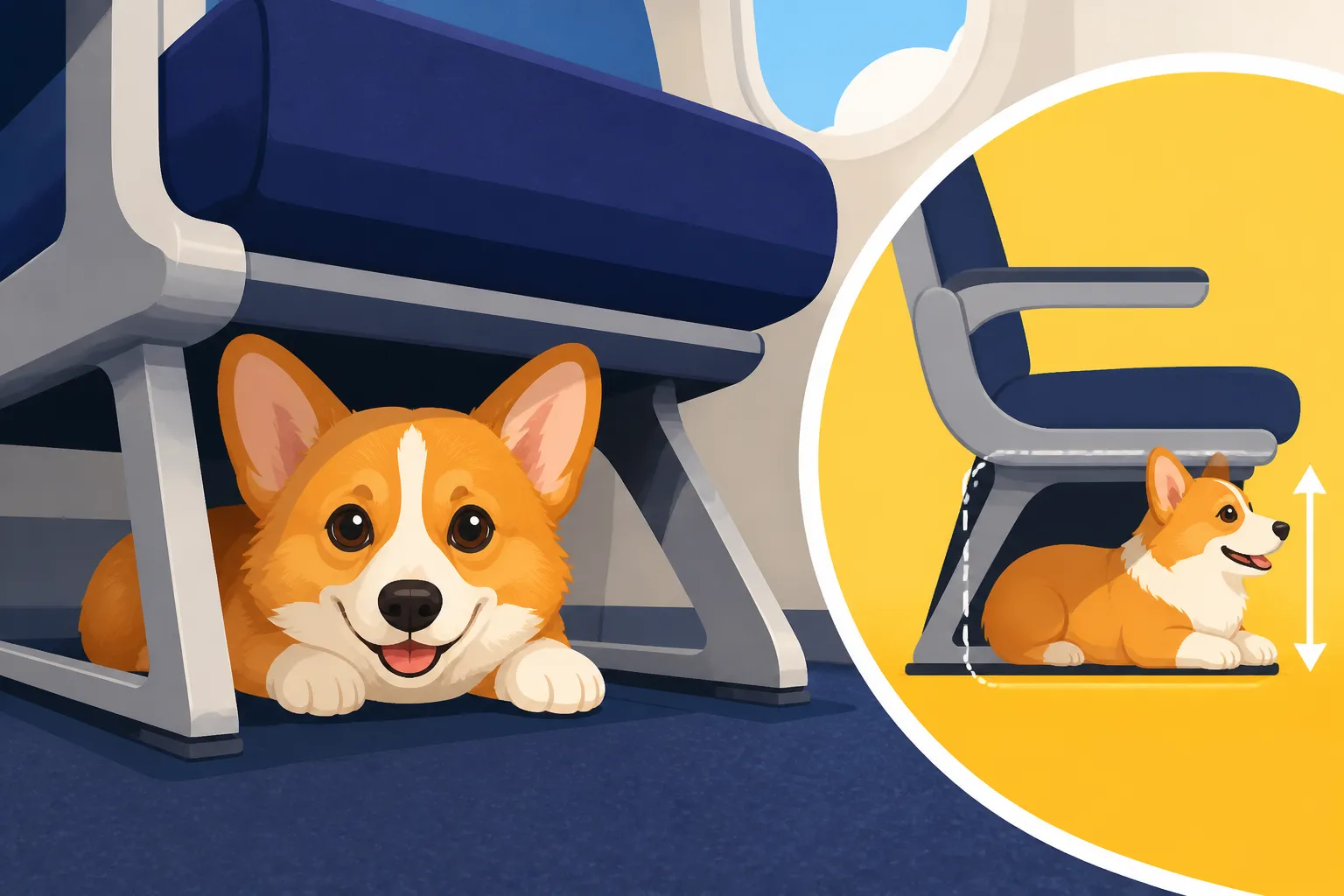
Whether a Corgi Fits Under an Airline Seat
Traveling with our beloved Corgis can be a real adventure, but when it comes to air travel, a common hurdle is figuring out if their chunky, low-rider bodies can actually fit under an airplane seat. It’s a genuine concern for many Corgi owners, especially since airline regulations are strict and vary, often leaving us scratching our heads. This guide will walk you through the nuances of flying with your Corgi in the cabin, helping you understand the rules, choose the right carrier, and prepare for a smooth journey.
Understanding Airline Pet Policies for Corgis
Navigating airline pet policies can feel like decoding an ancient scroll. Each airline has its own set of rules, and what works for one might be a no-go for another. The biggest factor for Corgi owners is almost always the "under-seat" dimension. Our Corgis are substantial little dogs, and while they might be short, they often have a surprising amount of length and girth!
The "Under-Seat" Rule and Corgi Dimensions
Most airlines require that any pet traveling in the cabin be small enough to fit comfortably in a carrier that can be stowed under the seat in front of you. This isn't just about fitting the carrier, but also ensuring your Corgi can stand up, turn around, and lie down naturally within that carrier. For our Corgis, who might measure around 10-12 inches tall and often weigh in the 25-30 pound range (sometimes more!), this is a tight squeeze.
The typical under-seat dimensions are roughly 18" L x 11" W x 11" H, though these can fluctuate by an inch or two depending on the airline and even the specific aircraft model. A Corgi, with their robust build, will likely brush the top of an 11-inch tall carrier when standing. It’s crucial that the carrier isn't just a perfect fit for the dimensions, but that your dog isn't cramped or uncomfortable. Imagine being stuck in a tiny box for several hours – no fun for anyone, especially not for a dog used to sprawling out. This is where understanding How Big a Corgi Is Meant to Be really comes into play, as every inch matters.
Airline-Specific Restrictions and Why They Matter
While the general rule is "fits under the seat," the devil is in the details of each airline's specific policy. Some airlines might have slightly more generous dimensions, while others are more restrictive. They often specify not only the carrier dimensions but also the type of carrier (soft-sided is generally preferred for under-seat travel as it can compress slightly), the maximum number of pets allowed per flight, and even restrictions on breeds. While Corgis aren't typically on "snub-nosed" breed lists that prohibit them from cargo travel, their size still makes them a borderline case for cabin travel.
It's not just about space; many airlines have temperature embargoes for pets traveling as cargo, which can prevent travel during extreme heat or cold. This reinforces the desire for Corgi owners to keep their furry friends in the cabin whenever possible. The implications of not meeting these rules can be severe: your Corgi could be denied boarding, or you might be forced to rebook, often at significant cost and stress. Always check the specific airline's pet travel section on their official website well in advance, and call to confirm if you have any doubts. Sometimes, speaking to a representative directly can clarify nuances that aren't clear online.
The Importance of Early Booking and Communication
You might think once you've checked the dimensions, you're good to go. Not quite! Airlines often limit the number of pets allowed in the cabin on any given flight. This is to ensure there's enough space for all human and animal passengers and to manage potential allergies or conflicts.
Booking your flight, and more importantly, reserving a spot for your Corgi, as early as possible is absolutely critical. Don't wait until the last minute. When you book your ticket, immediately contact the airline to add your Corgi to your reservation. Be prepared to provide your Corgi's breed, weight, and carrier dimensions. This proactive approach ensures you won't be turned away at the gate because the flight has already reached its pet limit. This is especially true for popular routes or during peak travel seasons. Planning ahead for Getting a Corgi There and Back Safely involves much more than just the flight itself.
Choosing the Right Carrier for Your Corgi
Selecting the perfect carrier is paramount to a successful Corgi flight. It needs to be compliant with airline rules, comfortable for your dog, and robust enough to handle the journey.
Soft-Sided vs. Hard-Sided Carriers: Pros and Cons
For in-cabin travel, soft-sided carriers are almost universally recommended over hard-sided ones for Corgis.
-
Soft-Sided Carriers:
- Pros: They are flexible, meaning they can often be squeezed slightly under the seat, conforming to irregular spaces better than rigid carriers. They are typically lighter, come with comfortable shoulder straps, and often have multiple mesh windows for ventilation and visibility. Many models have pockets for treats, leashes, and waste bags, which are super handy for travel. A good quality soft-sided carrier from a brand like Sherpa or Sleepypod can make a huge difference.
- Cons: They offer less rigid protection than hard carriers. If your Corgi is a chewer or prone to anxiety-induced escape attempts, a soft-sided carrier might not be as secure. They can also be harder to clean if an accident occurs.
-
Hard-Sided Carriers:
- Pros: Much more robust and protective. Easier to clean. If your Corgi needs to travel as cargo (which is generally discouraged due to stress and temperature risks for brachycephalic breeds, though Corgis are not brachycephalic, so they are often permitted), a hard-sided carrier is mandatory.
- Cons: Their rigidity makes them inflexible for under-seat storage. They rarely fit the specific under-seat dimensions for in-cabin travel, making them largely unsuitable for Corgis in the cabin.
For Corgis, the flexibility of a soft-sided carrier is usually the deciding factor for cabin travel. Look for one with good ventilation and a comfortable, washable fleece pad inside.
Measuring Your Corgi for a Compliant Carrier
This step cannot be stressed enough. Do not guess! You need to measure your Corgi accurately to ensure the carrier you pick is a true fit.
Here's how to measure:
- Length: Measure your Corgi from the tip of their nose to the base of their tail while they are standing. Add about 2-4 inches for comfortable turning space.
- Height: Measure your Corgi from the top of their head (or the tip of their ears if they are erect, like a Corgi's!) to the ground, again, while standing. This measurement is critical for the carrier's height. They must be able to stand fully without their head touching the top.
- Width: This is less critical for the dog's comfort but important for the carrier dimensions. Your Corgi should be able to turn around easily.
Compare these measurements to the exact interior dimensions of the carrier, not just the advertised "small" or "medium" size. Then, cross-reference the carrier's external dimensions with your chosen airline's under-seat requirements. Remember, What a Pembroke Weighs Against a Cardigan can give you an idea of overall size, but individual measurements are key.
| Carrier Feature | Why It Matters for a Corgi |
|---|---|
| Dimensions | Must fit under the seat (e.g., ~18"L x 11"W x 11"H) AND allow Corgi to stand, turn, and lie down naturally. |
| Material | Soft-sided is preferred for flexibility and slight compression under seats. |
| Ventilation | Mesh windows on multiple sides are crucial for airflow and to prevent overheating, especially for a double-coated Corgi. |
| Interior Padding | A soft, washable fleece pad provides comfort and absorbs minor accidents. |
| Secure Zippers | Self-locking zippers or clips prevent accidental openings or escape attempts. |
| Leash Clip | An internal clip to secure your Corgi's harness (never a collar in case of choking hazard) inside the carrier. |
| Pockets | Handy for storing health certificates, waste bags, a small water bottle, and treats. |
| Handles/Straps | Sturdy handles or a comfortable shoulder strap make carrying your Corgi through the airport much easier. |
Comfort and Safety Features to Look For
Beyond size and material, a good carrier prioritizes your Corgi's well-being. Look for:
- Excellent Ventilation: Mesh panels on at least three sides, preferably all four, are essential. Corgis have thick double coats and can overheat easily, especially in stressful situations.
- Washable Interior: Accidents happen, especially when a dog is nervous. A removable, washable fleece liner is a godsend.
- Secure Closures: High-quality, self-locking zippers or buckles prevent accidental escapes. You don't want your Corgi making a dash for it in the middle of a busy airport!
- Internal Leash Clip: Many carriers have an interior clip to attach to your dog's harness (never just a collar, as it could pose a choking risk). This prevents them from jumping out if a zipper is accidentally left open.
- Durability: Even soft-sided carriers should be made of sturdy, tear-resistant fabric. Brands like Chewy offer a wide selection of carriers that often meet these criteria, allowing you to read reviews from other pet parents.
Preparing Your Corgi for Air Travel
Once you have the right carrier and understand the rules, the next big step is getting your Corgi ready for the actual experience. This isn't something you can rush.
Acclimating Your Corgi to the Carrier
Imagine being shoved into a small box and told to stay there for hours. Scary, right? This is why carrier training is vital. Start weeks, even months, before your trip.
- Positive Association: Leave the carrier open with a soft blanket, toys, and treats inside. Let your Corgi explore it at their own pace. Feed meals near or inside the carrier. The goal is for them to see it as a safe, comfortable den, not a prison.
- Short Stays: Once your Corgi is comfortable entering, start closing the door for short periods (a few minutes), gradually increasing the time. Stay nearby, offering praise and treats.
- Simulated Travel: Once they tolerate longer stays, practice carrying them around the house, in the car for short drives, and even on errands. This helps them get used to the motion and sounds while confined.
- Desensitization: Play airport sounds softly in the background while your Corgi is in the carrier. The more familiar they are with strange noises, the less stressful the actual airport experience will be. Remember, Keeping a Confined Corgi Occupied can make a huge difference during this training phase. Consider enrichment toys that dispense treats slowly.
Vet Visits and Health Certificates
Before any air travel, a visit to your veterinarian is non-negotiable. Most airlines require a health certificate issued by a licensed vet within a specific timeframe (usually 10 days) of your travel date.
During this visit, your vet can:
- Assess overall health: Ensure your Corgi is healthy enough for travel.
- Update vaccinations: Make sure all required vaccinations are current.
- Provide a health certificate: This document verifies your Corgi is free of communicable diseases and fit to fly.
- Discuss anxiety management: If your Corgi is prone to stress, your vet might offer advice on calming techniques or, in some cases, mild sedatives. However, many airlines discourage sedation for pets, as it can interfere with their ability to regulate body temperature and balance at altitude. Always discuss this thoroughly with your vet and the airline.
- Check microchip: Ensure your Corgi's microchip information is up-to-date, just in case.
This visit is also a great opportunity to ask your vet about any specific concerns you have about your Corgi's unique needs or potential issues like Disc Disease in a Long-Backed Corgi, ensuring they are in the best possible condition for travel.
Minimizing Stress on Travel Day
The goal is to keep your Corgi as calm and comfortable as possible.
- Exercise Beforehand: A good, long walk or play session before heading to the airport can help your Corgi burn off excess energy and be more relaxed in the carrier. For a Corgi, The Forty-Five Minutes a Corgi Needs Daily is a minimum, so a longer session before travel is ideal.
- Limit Food & Water: Offer a light meal a few hours before the flight to prevent an upset stomach, but avoid overfeeding. Limit water intake in the hour or two leading up to departure to minimize the need for potty breaks, especially during the flight. You can offer ice chips or a small amount of water during layovers.
- Familiar Items: Put a favorite blanket or toy in the carrier – something that smells like home. This can provide a sense of security.
- Calming Aids: Consider natural calming aids like Adaptil spray or Thundershirt if your Corgi responds well to them. Discuss these with your vet in advance.
- Potty Breaks: Take your Corgi for a final potty break right before entering the airport and check for designated pet relief areas inside or outside the terminal.
On the Day of Travel: Navigating the Airport and Flight
The big day is here! Staying organized and calm yourself will go a long way in keeping your Corgi calm.
Check-in Procedures and Security Screening
When you arrive at the airport, head directly to the airline check-in counter. Even if you checked in online, you'll need to process your pet. Have all your documentation ready: your Corgi's health certificate, vaccination records, and any airline-specific forms. The agent will verify your reservation, confirm your Corgi's presence, and collect any pet travel fees.
Security screening can be a bit tricky. You'll typically need to remove your Corgi from their carrier, and the empty carrier will go through the X-ray machine. Your Corgi will then be carried by you through the metal detector. Keep them securely on a leash and harness, close to you. If your Corgi is nervous or prone to trying to bolt, consider a double leash or having another adult help. Practice holding your Corgi calmly beforehand; they might not appreciate being carried through a bustling, noisy security line.
Managing Your Corgi During the Flight
Once you're on the plane, the carrier with your Corgi inside must be stowed under the seat in front of you for the duration of the flight. This means no taking them out, even for a quick peek or cuddle. It's tough, but it's an airline rule for everyone's safety and comfort.
- Comfort Check: Once the carrier is under the seat, gently check that your Corgi seems settled and that the carrier isn't completely crushed. Soft-sided carriers usually have enough give.
- Quiet Reassurance: You can reach down and offer quiet words of reassurance or gently stroke your Corgi through the mesh if they seem anxious. Avoid making a big fuss, as this can sometimes amplify their stress.
- Hydration (Limited): If it's a very long flight, you might be able to offer a few ice chips through the mesh or a travel water bottle nipple, but generally, minimal interaction is best.
- Dealing with Barks/Whines: Corgis are vocal, and occasional barks or whines can happen. If your Corgi is persistently vocal, try a quiet "hush" or offer a high-value, long-lasting chew (if permitted by the airline and won't cause choking) that they haven't had before. Some owners use a snuffle mat with small treats to provide mental stimulation. Brands like Ollie offer healthy, palatable treats that can be great for distraction.
Post-Flight Considerations
Congratulations, you made it! But the journey isn't quite over for your Corgi.
- Immediate Potty Break: As soon as you can, head to the nearest pet relief area, or outside the airport, to let your Corgi stretch their legs and relieve themselves. They've been holding it for a while!
- Rehydration and Food: Offer water and a small meal once you're in a quieter, safe space. Your Corgi will likely be thirsty and hungry.
- Observation: Keep a close eye on your Corgi for the next 24-48 hours. Air travel can be dehydrating and stressful, and some dogs might be a little quiet or have an upset stomach. Most recover quickly, but if you notice prolonged lethargy, vomiting, or diarrhea, contact a local vet.
- Rest: Give your Corgi plenty of quiet time to rest and decompress in their new environment. Whether a Corgi Should Sleep on the Floor is less important than simply finding a quiet, secure space for them to settle.
Flying with a Corgi in the cabin requires meticulous planning, a compliant carrier, and a calm demeanor. While it might seem like a lot of effort, having your furry companion by your side during travel often outweighs the logistical challenges. Just remember, preparation is key! You might even consider pet insurance like Healthy Paws to cover any unexpected vet visits during or after your travels, as stress can sometimes trigger underlying issues.
Disclaimer
This article is for general informational purposes only and does not constitute professional advice. Laws, prices and regulations vary by location and change over time. Consult a qualified professional for guidance on your specific situation.