The Jump That Ruptures a Corgi Disc
Corgi spinal anatomy and chondrodystrophy explain why jumping causes painful intervertebral disc ruptures and paralysis in dogs.

Corgi spinal anatomy and chondrodystrophy explain why jumping causes painful intervertebral disc ruptures and paralysis in dogs.
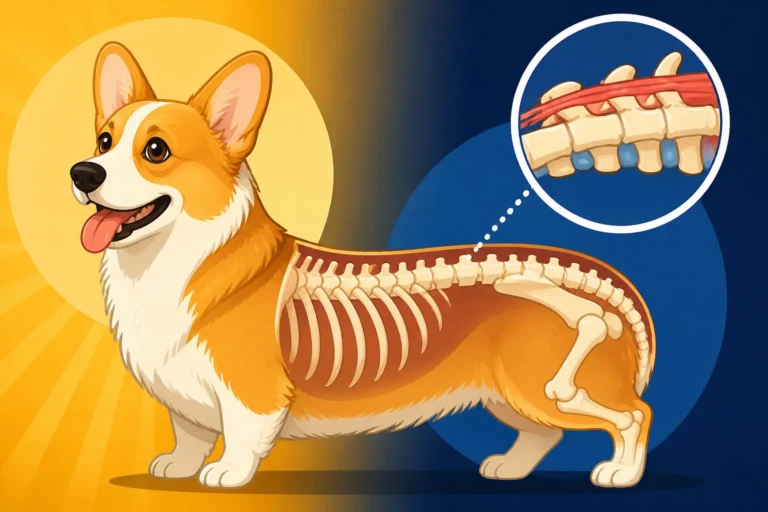
Corgi back anatomy and evolutionary history explain their vulnerability to spinal problems and unique cattle herding traits.

Corgi degenerative myelopathy is a progressive spinal cord disease linked to SOD1 gene mutations causing hind limb weakness.

Breeding an at-risk Corgi carrying the Degenerative Myelopathy mutation requires understanding genetic status and ethical responsibilities.

Corgi SOD1 test results reveal genetic mutations linked to Degenerative Myelopathy, explaining how this condition affects spinal cord nerve fibers.

Degenerative myelopathy progression in Corgis, from early subtle signs and nail scuffing to hind leg weakness and eventual mobility cart use.

Degenerative Myelopathy in Corgis causes gradual hind leg weakness and loss of coordination due to spinal cord deterioration.
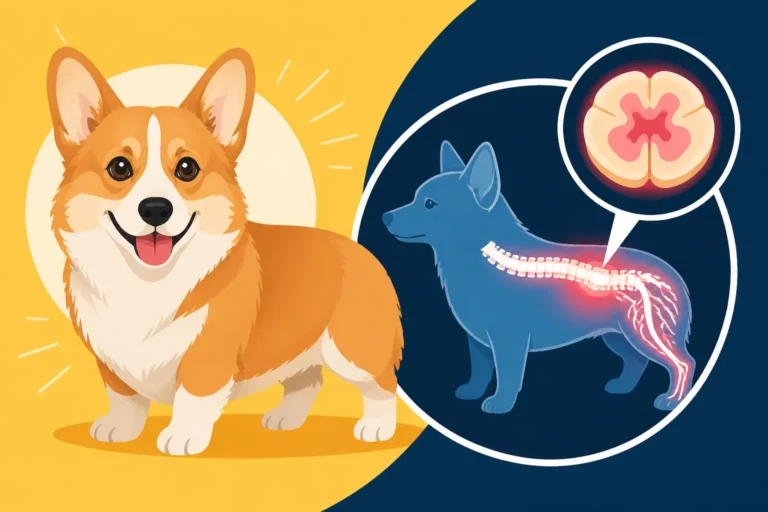
Degenerative myelopathy in Corgis typically begins when dogs reach eight to fourteen years of age, causing hind limb weakness.

Degenerative Myelopathy incidence rates in Corgis reveal why at risk dogs rarely develop this progressive neurological disease.

Corgi carrier statistics reveal the exact percentage of dogs that inherit the SOD1 gene mutation causing Degenerative Myelopathy.