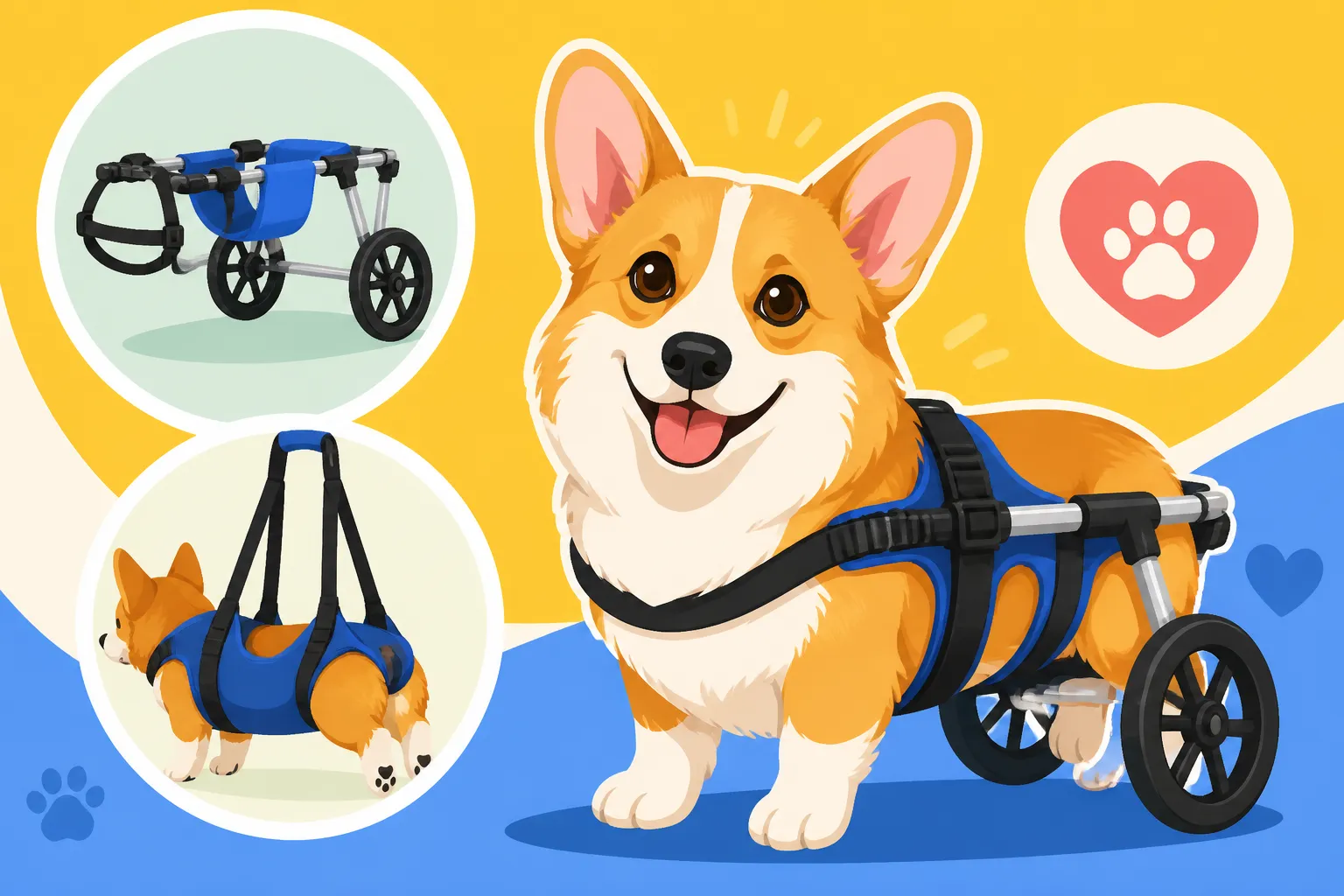
Carts and Slings for a Corgi With DM
Watching your beloved Corgi, who once zipped around with such boundless energy, start to falter and stumble as Degenerative Myelopathy (DM) progresses is one of the hardest experiences a dog parent can face. It’s heart-wrenching to see their back legs weaken, their gait become wobbly, and their independence slowly slip away. But you don't have to face this journey alone, and more importantly, your Corgi doesn't have to lose their zest for life. This guide is here to walk you through the world of mobility aids like carts and slings, helping you understand how these tools can dramatically improve your Corgi's quality of life, allowing them to continue enjoying walks, playtime, and all the simple joys they cherish.
Understanding Degenerative Myelopathy and Its Progression
Degenerative Myelopathy is a cruel disease, and for Corgi owners, it often feels like a constant shadow. It’s a progressive neurological condition that affects the spinal cord, leading to weakness and eventual paralysis of the hind limbs. Seeing your dog struggle is incredibly tough, and understanding what's happening and when to intervene with support is key.
The Reality of DM in Corgis
DM is often likened to ALS in humans because of its progressive nature, but it's important to remember that it's not painful itself. The frustration for our Corgis comes from the loss of function, not from pain. The disease targets the white matter of the spinal cord, responsible for transmitting movement commands to the limbs. As the nerve fibers degenerate, these signals can't get through effectively, leading to symptoms like wobbliness, scuffing of paws, and eventual inability to walk.
Many Corgi owners become acutely aware of this condition because Pembrokes, in particular, sit at the top of DM lists, with a significant percentage carrying the genetic mutation. While carrying the gene doesn't guarantee the disease, for those Corgis who do develop it, the journey can be challenging for both dog and owner. The initial signs of DM in a Corgi are often subtle, perhaps just a slight stumble or a hesitant step, making it easy to mistake for arthritis or general aging at first. It's a slow, insidious thief of mobility, and while there's no cure, proactive management can make a world of difference.
Recognizing When Mobility Aids Become Essential
Knowing when to introduce mobility aids can feel like a guessing game, adding another layer of stress. You don't want to start too early and make your Corgi feel hindered, but you also don't want to wait until they're completely down. Generally, the right time is when you notice consistent weakness in their hindquarters that significantly impacts their ability to walk or stand independently. This might manifest as:
- Frequent stumbling or dragging of the back paws: You might notice wear patterns on the tops of their back nails.
- Difficulty standing up from a lying position: They might struggle, wobble, or need assistance.
- Wobbly or uncoordinated gait: Their back end sways excessively, or they seem to "crab walk."
- Reluctance to go on walks or engage in once-loved activities: They might be trying to tell you it's too hard.
- Loss of balance: They might fall over easily, especially on slippery surfaces.
The period between a Corgi's first stumble and when they might need a cart can vary, but it’s often a gradual decline. Early intervention with slings, followed by carts as needed, can prevent muscle atrophy and maintain muscle mass, keeping them active for longer. It's about empowering them to continue moving, even when their own legs can't quite manage it anymore. Don't think of these aids as a sign of giving up, but rather as a testament to your commitment to their happiness and independence.
Types of Slings for Corgis with DM
Slings are often the first step in providing mobility assistance for Corgis with DM, especially in the earlier to mid-stages. They offer crucial support without completely taking over the function of the legs, allowing your dog to continue using their muscles as much as possible. They’re like a helping hand (or two!) that gives your Corgi the confidence and physical boost they need.
Full-Body Support Slings
Full-body slings are incredibly useful when your Corgi's weakness isn't confined solely to their hindquarters, or if they need more comprehensive assistance to get around. These slings wrap around both the chest and the abdominal/hindquarter area, distributing weight more evenly. Think of them as a gentle, supportive hug that helps lift and stabilize their entire core.
They are particularly beneficial for Corgis who struggle to get up from a lying position, who might occasionally stumble with their front legs, or who need support for negotiating stairs or uneven terrain. For example, if your Corgi needs to go outside to do their business but is struggling to balance or hold themselves up, a full-body sling allows you to gently support them while they go, preventing falls and offering security. These can also be invaluable during physiotherapy for a Corgi losing its legs, providing controlled support for exercises. When looking at options from retailers like Chewy, you'll find various designs, some resembling a vest with handles, others more like a wrap-around harness. The key is to find one that fits snugly without chafing, providing firm but comfortable lift.
Rear-End Support Slings
Rear-end support slings are typically the go-to for Corgis primarily experiencing hind leg weakness due to DM. These are simpler, often resembling a towel with handles, or a sturdy piece of fabric designed to cradle their pelvis and upper thighs. They allow you to manually lift and stabilize your Corgi's back end, taking some of the weight off their struggling legs while still allowing them to propel themselves forward with their front legs.
These slings are fantastic for short outings, potty breaks, or navigating a few steps. Imagine your Corgi getting that familiar excitement for a walk, but then their back legs just can't keep up. A rear-end sling lets you be their co-pilot, giving them the assistance they need to maintain their dignity and engagement with the world. They’re perfect for that stage where a Corgi scuffs its back nails, indicating they're losing proprioception but still have some leg strength. For instance, if your Corgi frequently drags one back foot, a sling can help lift that leg just enough to prevent scraping and potential injury. Many owners find these slings indispensable for daily bathroom breaks, especially when dealing with incontinence in a Corgi with DM, as they allow for quick and easy support.
Choosing the Right Sling Material and Fit
Selecting the perfect sling goes beyond just deciding on full-body or rear-end. The material and fit are paramount for your Corgi's comfort, your ease of use, and the longevity of the product.
Look for durable, washable materials like neoprene, sturdy canvas, or breathable mesh. Neoprene offers excellent support and is often waterproof or water-resistant, which is a huge plus for outdoor use or if your Corgi has accidents. Breathable mesh can be more comfortable in warmer climates, preventing overheating under a thick Corgi coat. Padded areas, especially around the groin and chest, are essential to prevent chafing and discomfort during prolonged use. Adjustable straps and buckles are also non-negotiable, allowing you to achieve a snug, secure fit without restricting movement or causing pressure points.
The fit itself should be snug enough to provide proper support without being too tight. You should be able to slide two fingers comfortably under the straps. Too loose, and the sling won't offer adequate support; too tight, and it can cause skin irritation, discomfort, or even restrict blood flow. For example, when using a rear-end sling, ensure it cradles the hips and thighs rather than putting pressure directly on the abdomen or spine. Always measure your Corgi carefully according to the manufacturer's guidelines, typically measuring chest girth and sometimes length from front to back. A well-fitting sling, much like a good orthopedic bed, contributes significantly to your Corgi's overall comfort and willingness to use the aid.
Exploring Wheelchairs and Carts for Corgis
When a sling isn't quite enough, or your Corgi's DM has progressed to a point where their hind legs offer very little support, a wheelchair or cart becomes a powerful tool for regaining independence. These devices are truly life-changers, giving Corgis back the ability to run, play, and explore without relying solely on their weakened limbs.
Two-Wheel Carts for Hind Limb Support
For most Corgis battling DM, a two-wheel cart designed for hind limb support is the most common and effective solution. These carts consist of a lightweight frame with two wheels at the back, connected to a support saddle that goes under your Corgi’s belly and a harness that fits around their front chest. The back legs are either placed in stirrups to keep them from dragging or allowed to touch the ground lightly, depending on the dog's remaining strength and comfort.
The beauty of these carts is that they take the weight off the hindquarters entirely, allowing the Corgi to use their stronger front legs to propel themselves forward. It's incredible to witness a Corgi, who hasn't been able to walk properly for months, suddenly light up and start "running" again in their new wheels. This freedom isn't just physical; it’s a huge mental boost, keeping them engaged and active. These carts are ideal when your Corgi's hind legs cross over or they’ve lost the ability to bear weight in the back. Companies like Walkin' Pets (available on Chewy) offer excellent two-wheel options specifically designed for smaller, long-backed breeds, ensuring proper spinal alignment and comfort.
Four-Wheel Carts for Advanced Support
While less common for Corgis with DM initially, four-wheel carts become necessary when the disease progresses to affect the front limbs as well. This can happen in very advanced stages of DM, where the Corgi experiences weakness or even paralysis in all four limbs. A four-wheel cart provides comprehensive support, lifting all four legs and allowing your Corgi to be fully suspended and mobile.
These carts are generally bulkier and require a bit more adjustment, as they completely redistribute the dog's weight. They ensure stability and allow a Corgi who might otherwise be completely immobile to still experience the joy of movement. This level of support can be crucial for maintaining their quality of life, preventing painful pressure sores from lying down too much, and allowing for easier cleaning and care. Although challenging to witness your Corgi needing this much support, seeing them zoom around again, even with all four legs suspended, is a powerful reminder of their resilience and your dedication.
Custom vs. Off-the-Shelf Carts
When it comes to carts, you essentially have two main avenues: off-the-shelf models or custom-built options. Both have their pros and cons, and the best choice often depends on your Corgi's specific needs, the progression of their DM, and your budget.
Off-the-shelf carts, often available from major pet retailers and specialized mobility aid companies, are typically more affordable and readily available. Brands like Walkin' Pets or K9 Carts offer adjustable models that can accommodate a range of Corgi sizes. You measure your dog (height, length, weight, etc.), and then order the corresponding size. The benefits include quicker delivery, lower cost, and often easier assembly. However, while adjustable, they might not offer the perfect ergonomic fit for every uniquely shaped Corgi. A poorly fitting cart can lead to chafing, discomfort, or even improper spinal alignment, which is the last thing you want for a Corgi with a delicate back.
Custom-built carts, on the other hand, are tailored precisely to your Corgi's measurements and specific mobility needs. These are often made by smaller, specialized manufacturers who take a series of detailed measurements and may even ask for photos or videos of your Corgi moving. The main advantage is an unparalleled fit, maximizing comfort, support, and usability. This can be especially beneficial for Corgis with unique conformations or very specific limitations. The downside is that custom carts are significantly more expensive and take longer to produce. However, for some owners, the investment in a perfectly fitted cart that provides maximum comfort and longevity is well worth it. Before making a decision, it can be helpful to consult with your veterinarian or a canine rehabilitation specialist, as they can help determine the ideal type of cart and fit for your individual Corgi's situation.
Integrating Mobility Aids into Daily Life
Bringing a new mobility aid into your Corgi’s life is a journey, not a switch. It requires patience, positive reinforcement, and a commitment to helping your furry friend adjust. The goal is to make the cart or sling a natural extension of their ability to move, not something they dread or associate with discomfort.
Introducing the Aid to Your Corgi
The key to successful integration is a gradual and positive introduction. Never force your Corgi into a sling or cart. This isn't just about their physical acceptance, but their emotional one too.
Start by letting your Corgi investigate the aid on their own terms. Place it on the floor, let them sniff it, and reward them with praise and high-value treats (perhaps some bits from their favorite Ollie meal, if appropriate for their diet) for any positive interaction. For a sling, drape it over them briefly, offer treats, and then remove it. Gradually increase the time it's on them, working up to gentle lifts. For a cart, begin by letting them simply stand in the frame for a few seconds, getting used to the sensation without moving. This might feel like a slow process, but rushing it can create a negative association.
When they’re ready to try moving, do so in a quiet, familiar environment like your living room or a small, enclosed yard. Use their favorite toys or treats to encourage a few steps. Celebrate every tiny victory! Keep initial sessions very short – just a few minutes – and end on a positive note before they become tired or frustrated. Remember, this is a new skill for them, and it takes practice, just like training a Corgi to use a ramp, but with even higher stakes. Consistency is crucial, as is keeping the experience fun and rewarding.
Daily Routines and Maintenance
Once your Corgi is comfortable with their mobility aid, integrating it into daily routines becomes second nature for both of you. This involves planning for walks, potty breaks, feeding, and nighttime.
For walks, the sling or cart will allow them to engage more fully. Adjust your pace to match theirs, and ensure they have access to water. Potty breaks can be managed effectively with a sling, offering quick support, or by carefully guiding your Corgi in their cart to appropriate spots. Many carts are designed to allow dogs to relieve themselves while still in the frame, which is a huge convenience. Keeping their cart or sling clean is also essential; regular wiping down of the frame and washing of fabric components prevents skin irritation and keeps things hygienic. Checking for any signs of chafing or pressure sores, especially in their armpits or groin area, should be part of your daily routine.
Consider how their aid impacts feeding and rest. Some Corgis might prefer to eat while standing supported in their cart, while others might be more comfortable out of it. For sleeping, always remove the cart, and ensure they have a comfortable, supportive bed. The main goal is to allow your Corgi to maintain as much of their normal routine as possible, adapting it as needed with their newfound mobility.
Maximizing Comfort and Preventing Complications
Even with the best fitting aids, vigilance is key to ensuring maximum comfort and preventing potential complications. DM is progressive, and your Corgi's needs will evolve.
Regularly inspect your Corgi's skin, especially in areas where the sling or harness makes contact. Look for redness, irritation, sores, or hair loss. These can indicate a need for adjustment, additional padding, or a different type of aid. Pressure sores are a serious concern for dogs with limited mobility, so investing in good quality, well-padded equipment is crucial. You might find specialty padding or wraps that can be added to standard harnesses for extra protection.
Another important aspect is maintaining muscle condition. While carts allow movement, they don't necessarily engage all the same muscles. Regular, gentle physiotherapy, massage, and controlled exercises (if cleared by your vet or rehab specialist) can help prevent muscle atrophy in the unsupported limbs. Even just passive range-of-motion exercises can make a difference. Consulting with a professional about physiotherapy for a Corgi losing its legs can provide specific exercises tailored to your Corgi's condition. Furthermore, ensure your Corgi’s weight is kept in check; excess weight adds strain to their frame, even in a cart. A Corgi with DM should ideally hold the body condition score a Corgi should hold, which is on the leaner side. This not only eases strain but also allows for more comfortable use of mobility aids.
Financial Considerations and Support for Mobility Aids
Let’s be honest, caring for a Corgi with DM, especially when it reaches the point of needing mobility aids, can feel like a significant financial undertaking. It's not just the initial cost of the equipment, but also the ongoing care, vet visits, and potentially rehabilitation. But don't let the numbers scare you; there are ways to manage these expenses and ensure your Corgi gets the support they need.
The Cost of Carts and Slings
The price tag on mobility aids can vary quite a bit, depending on the type, brand, and whether it’s an off-the-shelf or custom model.
- Slings: Generally, slings are the most affordable option, ranging from $30 to $100 for high-quality, durable models. Basic rear-end support slings might be on the lower end, while full-body support systems with more features and padding will be closer to the higher end.
- Two-Wheel Carts: These typically cost anywhere from $200 to $600. Factors influencing the price include the brand (e.g., Walkin' Pets, K9 Carts), materials used (lightweight aluminum vs. heavier steel), and adjustability features. Custom two-wheel carts can run higher, potentially $500 to $1,000+.
- Four-Wheel Carts: As they offer more comprehensive support and are often more complex in design, four-wheel carts tend to be pricier, generally starting from $400 to $800+, with custom options easily exceeding $1,000.
Remember, these are initial costs. You might also factor in accessories like different types of harnesses, stirrups, or additional padding. It’s a considerable investment, but for many, the return on investment in their Corgi's happiness and mobility is priceless.
Insurance and Other Funding Options
The good news is that pet insurance can sometimes help offset the cost of mobility aids, especially if your Corgi was enrolled before their DM diagnosis. Policies from providers like Healthy Paws often cover treatments and equipment for chronic conditions, though you'll need to check the specifics of your plan regarding pre-existing conditions and medical devices. Typically, a slipped disc as a pre-existing Corgi condition or DM might not be covered if the symptoms appeared before enrollment. However, if your Corgi was insured young and healthy, your policy might contribute significantly to the cost of a cart fitting and the device itself.
Beyond traditional insurance, there are other avenues for financial assistance:
- Veterinary Care Credit Lines: Services like CareCredit offer financing options for veterinary expenses, allowing you to pay over time.
- Non-profit Organizations: Some breed-specific rescues or general animal welfare organizations offer grants or financial aid for owners facing significant veterinary bills or needing mobility equipment. It's worth researching local and national groups.
- Fundraising: Online platforms like GoFundMe have helped many pet owners rally support from their community for their dog's medical needs.
- Payment Plans: Don't hesitate to ask your veterinarian's office if they offer payment plans for larger bills.
The key is to explore all options, as you might be surprised by the support available.
DIY Solutions and Secondhand Markets
For those on a tighter budget, or if you're handy, exploring DIY solutions or secondhand markets can be a viable route. While it requires more effort, it can significantly reduce costs.
DIY Solutions: For slings, a sturdy towel or a robust reusable shopping bag (with handles reinforced) can serve as a temporary or emergency rear-end support. There are also online tutorials for creating simple harnesses from durable fabric and webbing. For carts, while building a full wheelchair from scratch is complex and requires careful engineering to ensure safety and proper alignment, some creative individuals have adapted PVC pipes for very basic models. However, it's critical that any DIY cart does not put undue stress on your Corgi's spine or cause discomfort. Consulting with a vet or physical therapist on the design is highly recommended.
Secondhand Markets: Websites like Facebook Marketplace, Craigslist, or specialized pet mobility forums often have used carts and slings for sale. Many owners are eager to pass on their equipment at a reduced cost once their own beloved pet no longer needs it. You might find a gently used Walkin' Wheels cart for a fraction of the new price. When buying secondhand, always:
- Inspect thoroughly: Check for damage, wear and tear, and ensure all parts are present.
- Verify size: Make sure the measurements align with your Corgi's.
- Clean and sanitize: Thoroughly clean any used equipment before your Corgi uses it.
While not always perfect, these options can make mobility aids more accessible, ensuring your Corgi can maintain their quality of life without breaking the bank.
Emotional Support and Quality of Life
Beyond the physical mechanics of slings and carts, navigating DM with a Corgi is deeply emotional. It’s a journey filled with adjustments, triumphs, and sometimes, heartbreak. Focusing on their mental well-being and acknowledging your own feelings as a caregiver are just as crucial as providing the right equipment.
Supporting Your Corgi's Mental Well-being
A Corgi's spirit is often bigger than their short stature, and even with physical limitations, they crave engagement and purpose. DM can be frustrating for them, leading to signs of depression or anxiety if they feel isolated or unable to participate in their usual activities.
Mobility aids are fantastic for physical freedom, but you also need to nurture their minds. Continue with mental stimulation. Puzzle toys, scent games, and even just interactive play with you can keep their brains active. Use their sense of smell, which is often unaffected, by hiding treats around the house (if they can safely navigate) or engaging them in slow, controlled sniff walks. Even when confined due to a flare-up or post-surgical recovery, there are ways to keep a crated Corgi sane. Soft verbal praise, gentle massages, and consistent affection are invaluable. Ensure they still feel like an integral part of the family, not just a patient. Celebrate their achievements, no matter how small, and let them know their spirit still shines brightly.
Supporting Yourself as a Caregiver
Let's be real: caring for a Corgi with progressive mobility issues is physically and emotionally exhausting. You're constantly lifting, assisting, cleaning, and worrying. It’s okay to feel overwhelmed, sad, or even frustrated. These emotions are natural, and you are not alone.
Recognize that you are doing an incredible job. Take breaks when you need them. Enlist help from family, friends, or even professional pet sitters who understand the specific needs of a Corgi on rest orders or with mobility challenges. Connect with other Corgi owners or DM support groups online; sharing experiences and advice can be a huge comfort. Don't neglect your own health and well-being. Getting enough rest, eating well, and finding moments of joy for yourself will help you be a better caregiver for your Corgi. Remember the unwavering love and joy your Corgi brings into your life, and let that be your fuel.
Deciding When a Corgi With DM Has Had Enough
This is perhaps the most difficult conversation any Corgi owner faces, and it's one that often comes with profound guilt and sadness. Deciding when a Corgi with DM has had enough is an agonizing process, but it's ultimately an act of love to prevent prolonged suffering.
While DM itself isn't painful, the secondary effects can significantly diminish quality of life. These can include severe muscle atrophy, chronic pressure sores, incontinence that leads to skin infections, persistent anxiety or depression due to immobility, or the inability to comfortably eat, drink, or sleep. Sometimes, other health issues arise alongside DM, further complicating their comfort.
This decision is deeply personal and should be made in close consultation with your veterinarian, who can assess their overall health, pain levels (if any), and prognosis. Evaluate their "good days" versus "bad days." Are they still finding joy in food, your presence, or short outings in their cart? Are they still able to communicate with you and engage with their world? The goal is to maximize their comfort and dignity. There will come a point when, despite all your efforts and the incredible help of mobility aids, the bad days outweigh the good. At this time, remember that you gave them a beautiful life, fought hard for their comfort, and that letting them go peacefully is the final, most selfless act of love.
Comparative Overview: Slings vs. Carts for Corgis with DM
Choosing between a sling and a cart, or knowing when to transition, depends heavily on your Corgi's individual progression of DM. Here’s a quick overview to help you weigh the options:
| Feature | Slings (Rear-end or Full-body) | Carts (Two-wheel or Four-wheel) |
|---|---|---|
| DM Stage | Early to Mid-stage (mild to moderate hind limb weakness) | Mid to Advanced-stage (severe hind limb weakness or paralysis) |
| Support Level | Assisted weight bearing; owner provides manual lift/stabilization | Full weight bearing; dog uses front legs (2-wheel) or no legs (4-wheel) |
| Independence | Moderate (requires owner assistance for sustained movement) | High (dog moves independently once harnessed) |
| Cost | Lower (typically $30 – $100) | Higher (typically $200 – $800+, custom can be $1000+) |
| Setup Time | Quick and easy | Longer initial setup; daily harnessing takes a few minutes |
| Portability | Very high (foldable, lightweight) | Moderate (can be disassembled, but bulkier) |
| Exercise | Still encourages use of remaining leg strength | Allows for vigorous activity, even "running" |
| Potty Breaks | Easy to use for assistance | Most designs allow for elimination while in cart |
| Ideal Use | Short trips, quick bathroom breaks, assisted transitions, physical therapy | Extended walks, sustained outdoor activity, indoor mobility for fully impaired |
This table provides a general guideline. Many Corgi owners find themselves using a combination of both – a sling for quick trips outside and a cart for longer adventures or when their Corgi needs maximum support. The best approach is always to assess your Corgi's current needs, consult with your vet, and adjust as their DM progresses.
Disclaimer
The information provided in this guide is intended for informational purposes only and does not constitute veterinary medical advice. Always consult with a qualified veterinarian or a canine rehabilitation specialist regarding your Corgi's specific health condition, diagnosis, and treatment plan. Individual results with mobility aids may vary, and proper fitting and usage are crucial for your dog's safety and comfort.